

This post may contain affiliate links. If you make a purchase through links on our site, we may earn a commission. Please read our disclosure policy.

Mulching is simple, and if you do it right, it can make a world of difference in how your garden thrives. Whether you’re working around trees, perennial beds, or your vegetable garden, the method and material matter. After years of trial and error on my Iowa farm, I’ve learned what really works and what doesn’t.
So here it is: my complete guide, from early spring cleanup to late fall prep.
Table of Contents
- How to Edge a Garden Bed Before Mulching
- Best Mulch to Use for Trees, Beds, and Vegetables
- Why You Should Never Volcano Mulch Your Trees
- How Thick Should Mulch Be?
- When Is the Best Time to Mulch?
- Should You Replace Mulch Every Year?
- Why I Skip Landscape Fabric
- Let Perennials Mulch Themselves
- How Much Bagged Mulch Do You Need?
- What to Remember Every Season
- Frequently Asked Questions
- Conclusion
- More About Gardening
How to Edge a Garden Bed Before Mulching
Start with a clean edge
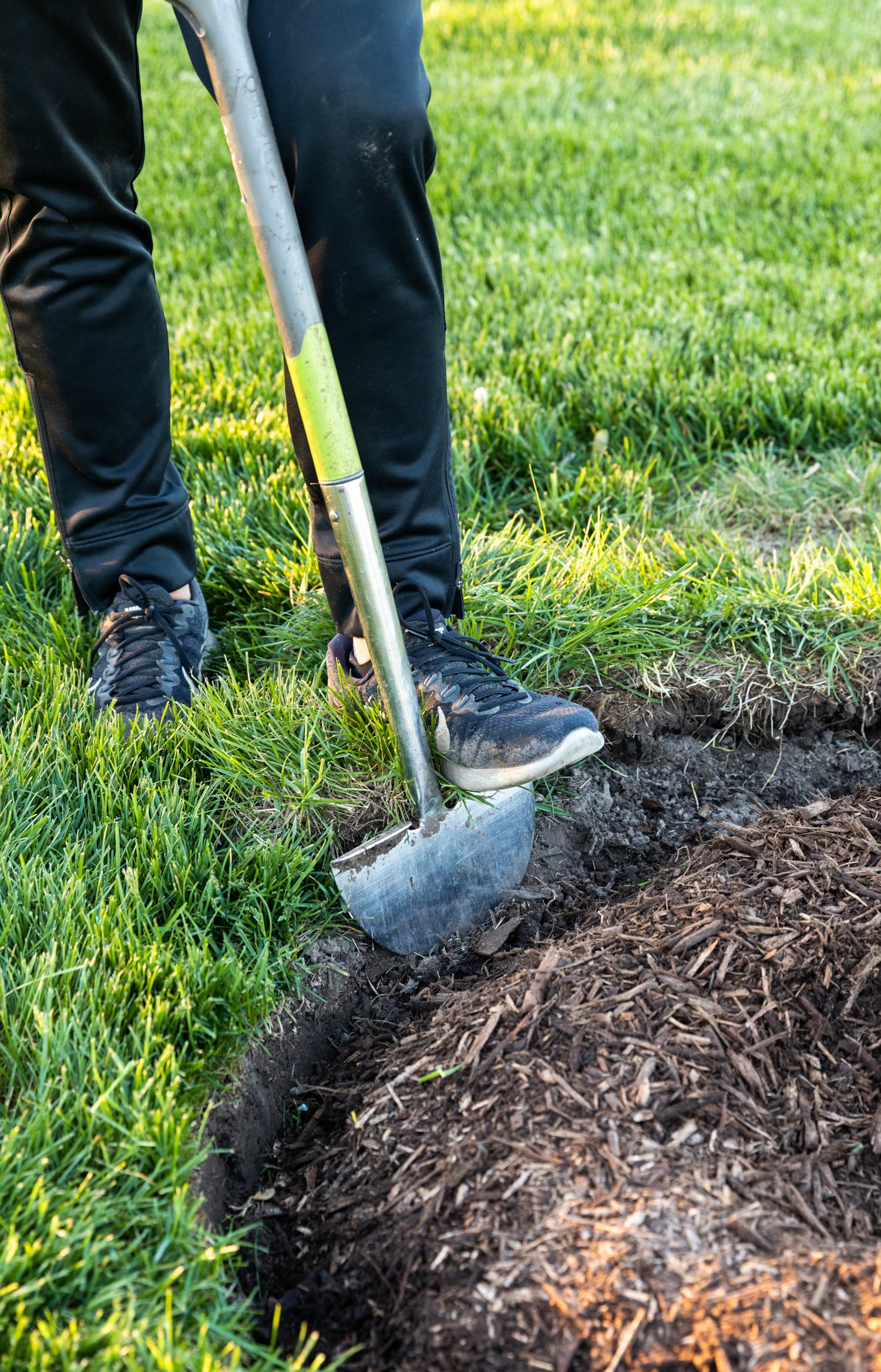
One of the best things you can do for your trees and beds? Create a crisp, clean edge with a half-moon edger. I use mine (stainless steel version by Radius brand) to cut a clear 4-inch trench around tree rings and flowerbeds. This isn’t just for looks. That exposed trench makes it harder for grass and weed roots to jump in and compete for moisture.
- For trees, edge a circle about 3 feet from the trunk.
- Keep the trench open to air and light, as this prevents roots from creeping in.
Best Mulch to Use for Trees, Beds, and Vegetables
Choose the Right Type
Not all types are created equal. Here’s what I reach for:
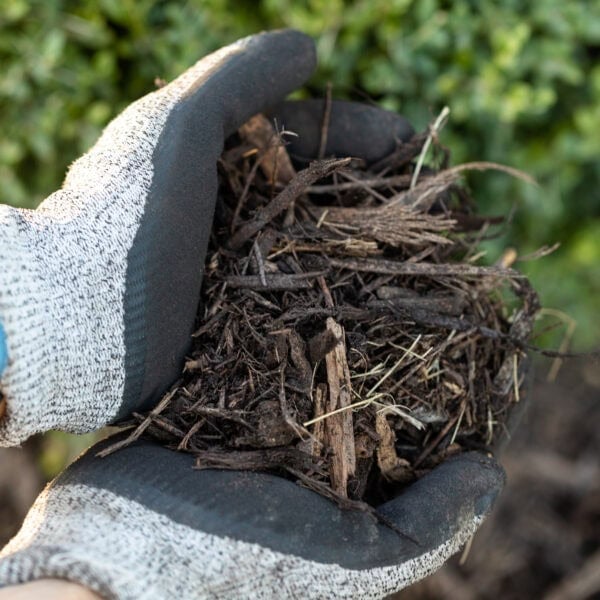
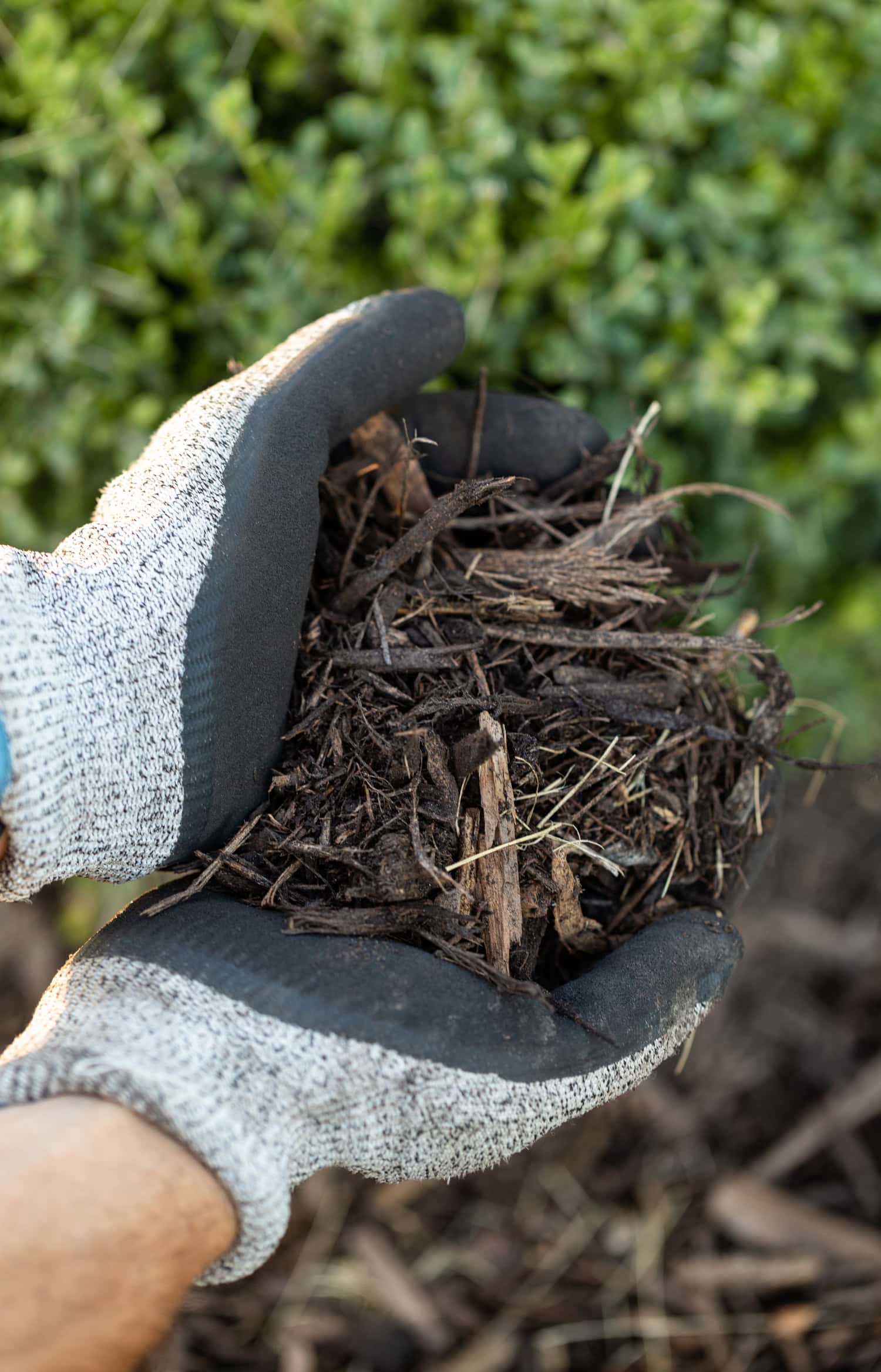
- Hardwood mulch (untreated and natural) – My go-to for trees and formal beds. No dyes, no synthetic chemicals. Just real wood that slowly breaks down and feeds the soil.
- Compost – Perfect for perennial beds. I refresh with compost yearly because it builds up the soil and supports the plants I’m continually adding or dividing.
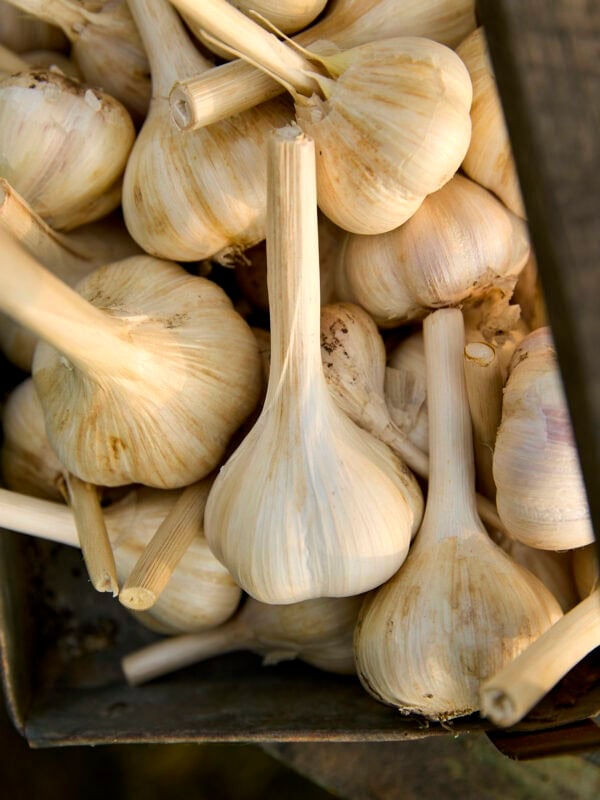
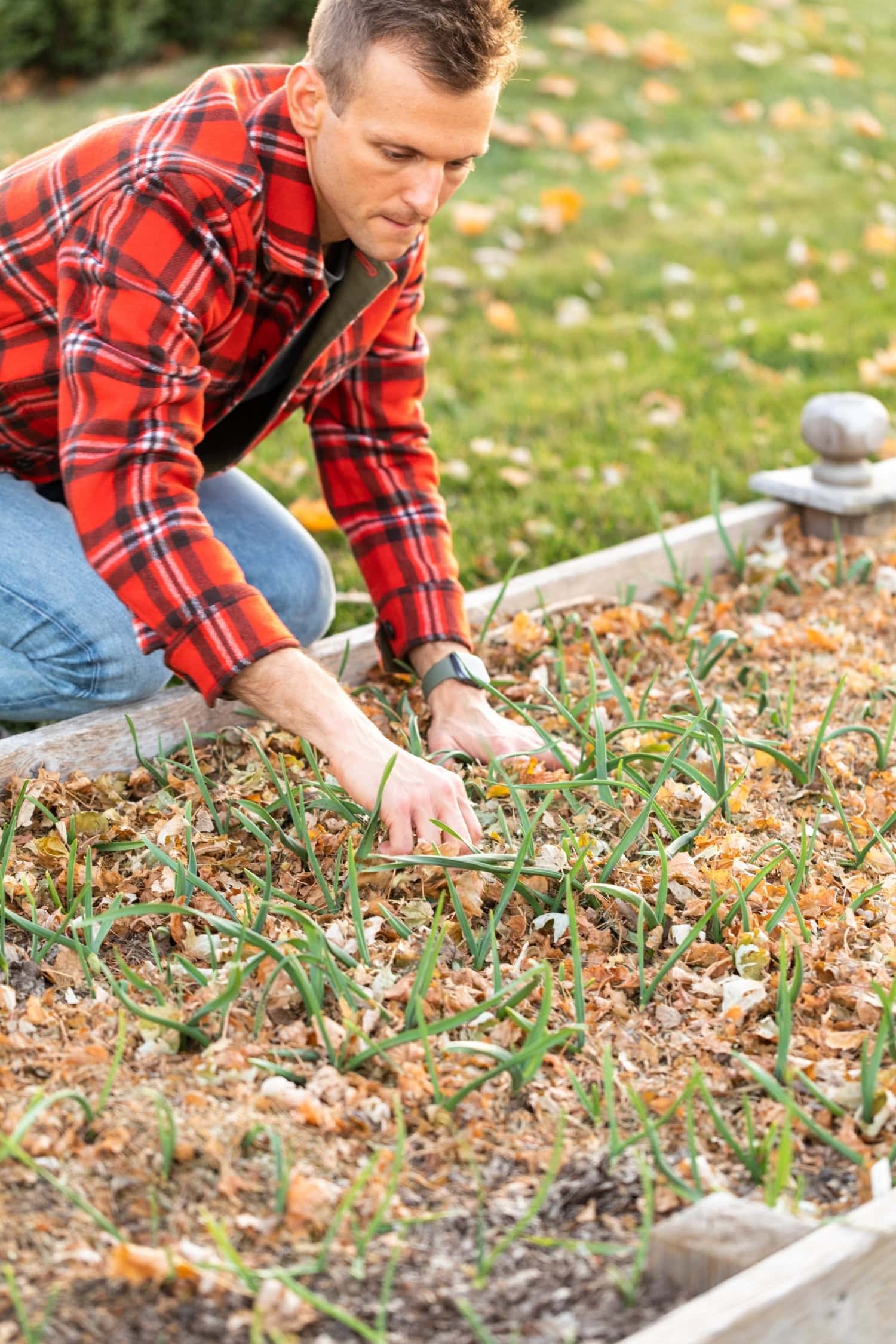
- Leaf mulch – In the fall, I mow and collect leaves to use as mulch over garlic, shallots, and empty vegetable beds. It’s insulating, organic, and free.
NEVER use the dyed varieties! Those bright red and black mulches are packed with chemicals that leach into the soil. And be careful with bagged mulch made from ground-up pallets, as they’re often treated with unknown substances.
Why You Should Never Volcano Mulch Your Trees
The Golden Rule: Keep the Root Flare Exposed
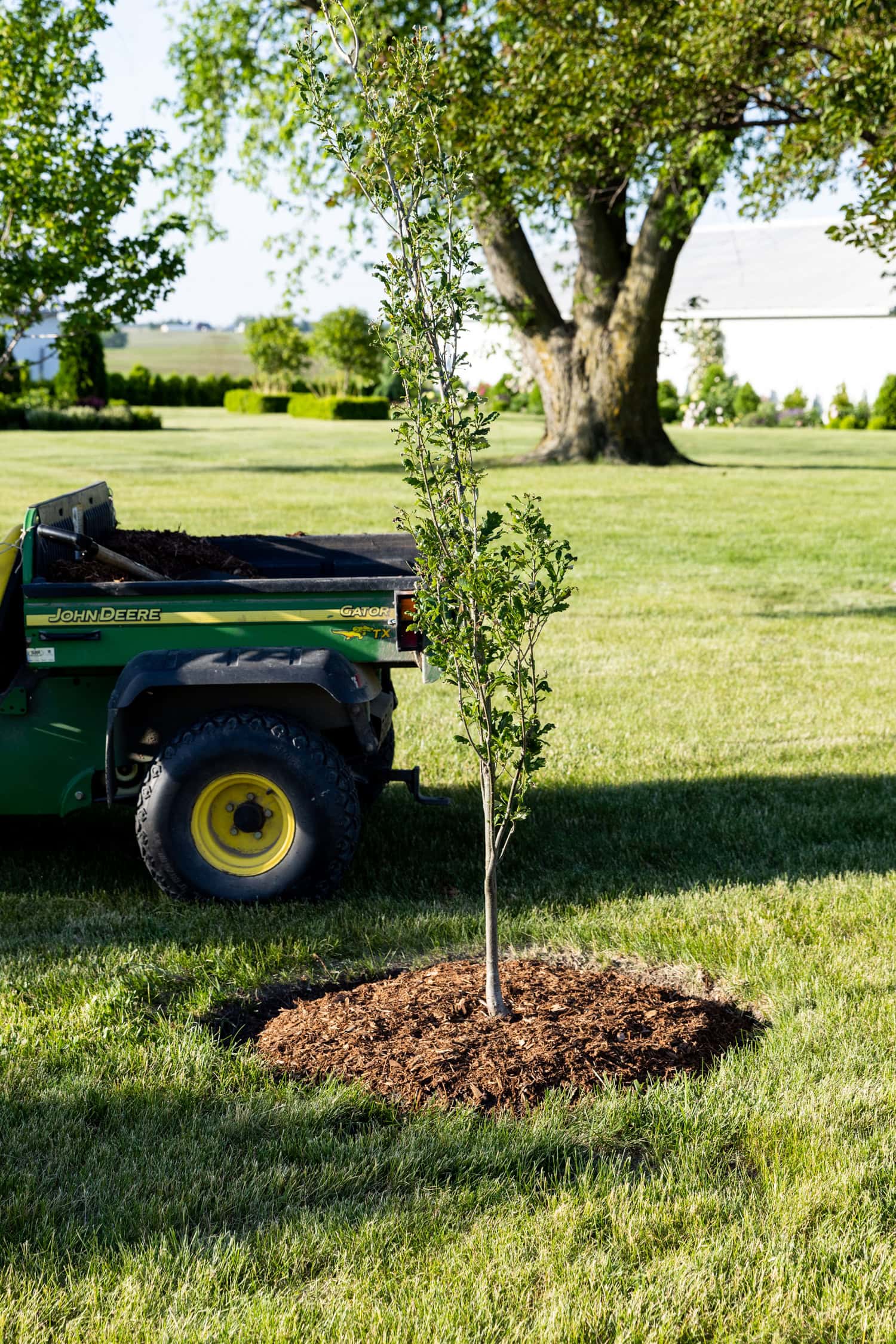
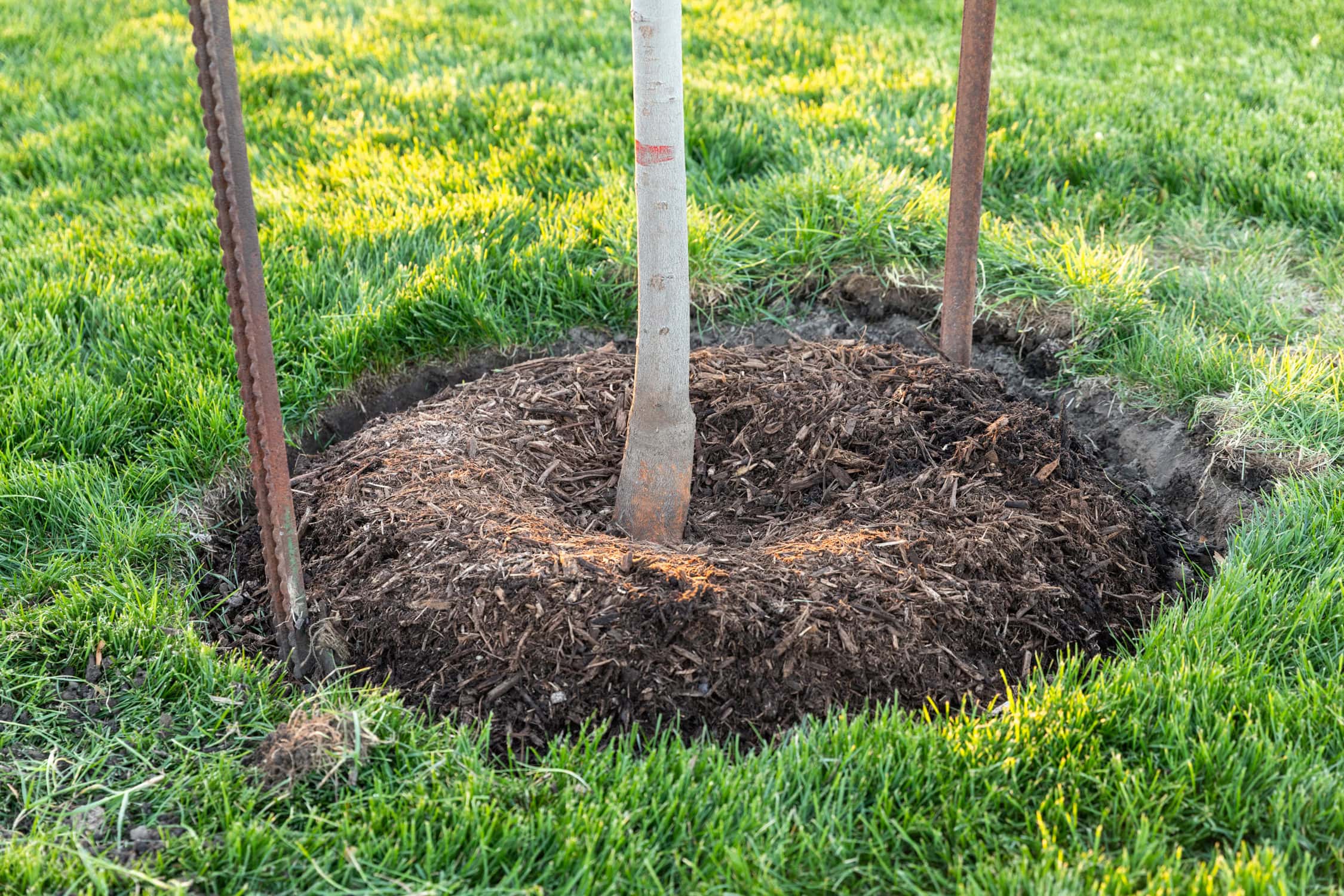
This may very well be my biggest soapbox: do not create a volcano around the base of your trees. That means no mounding up around the trunk. Ever.
- The root flare (where the trunk starts to flare out at the base into the roots) should always be visible.
- Piling mulch around the trunk traps moisture, which leads to rot, disease, and pest issues.
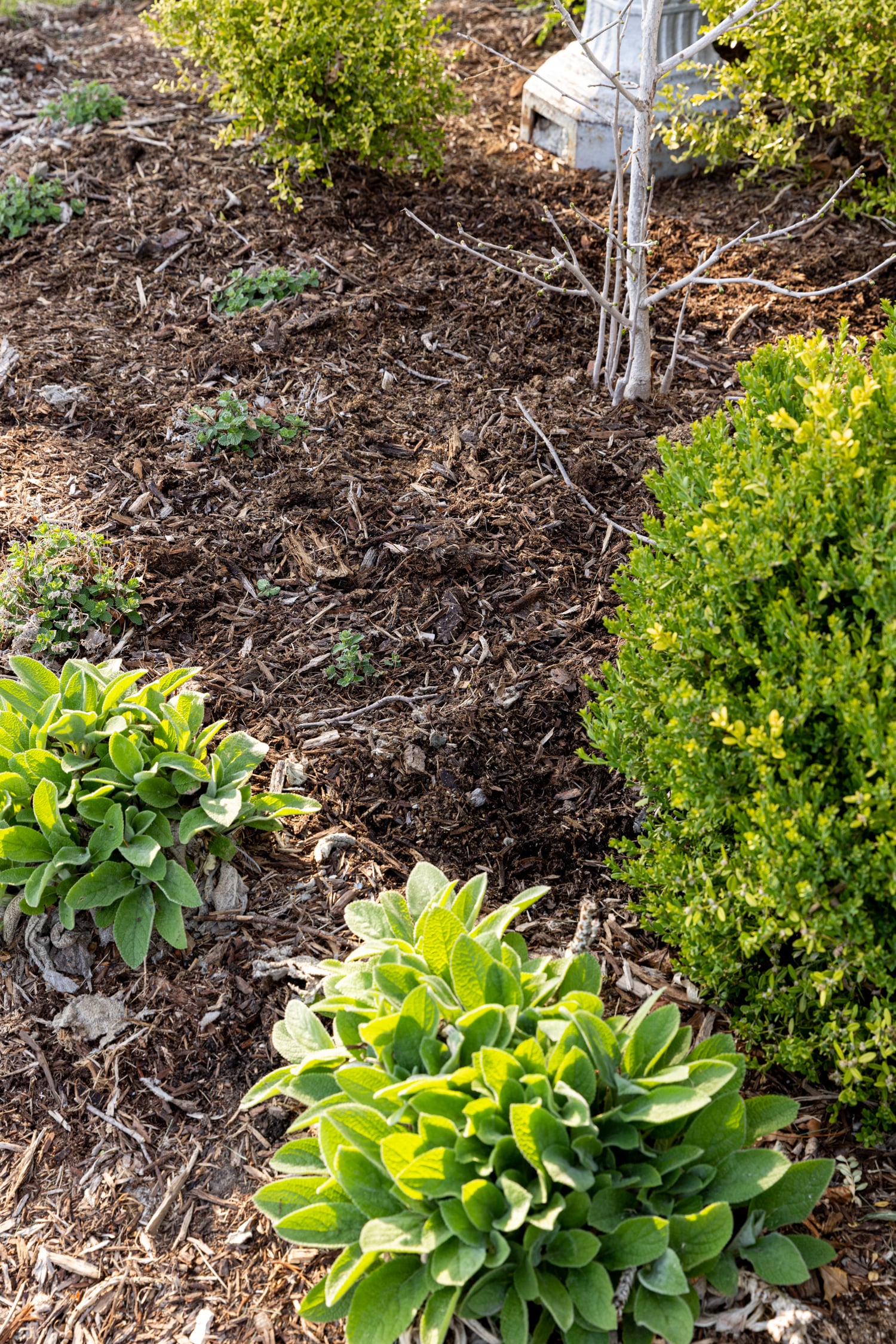
- Instead, build a gentle ring about 2–3 inches deep and keep it pulled back from the trunk itself.
How Thick Should Mulch Be?
More is not better. Here’s what I aim for:
- Trees and flowerbeds – 2-3 inches is ideal.
- Beds with perennials – 1-2 inches if it’s the wood variety. Too much and it will mat down, harbor mildew, and suffocate the roots.
- Leaf mulch in fall – Up to 3-4 inches on garlic and shallots for insulation, allowing any green shoots to break through. It compacts naturally over winter.
When Is the Best Time to Mulch?
When it comes to adding mulch, timing is everything.
- Spring – Best time for perennials, before the plants fully emerge. That way, they can push through easily.
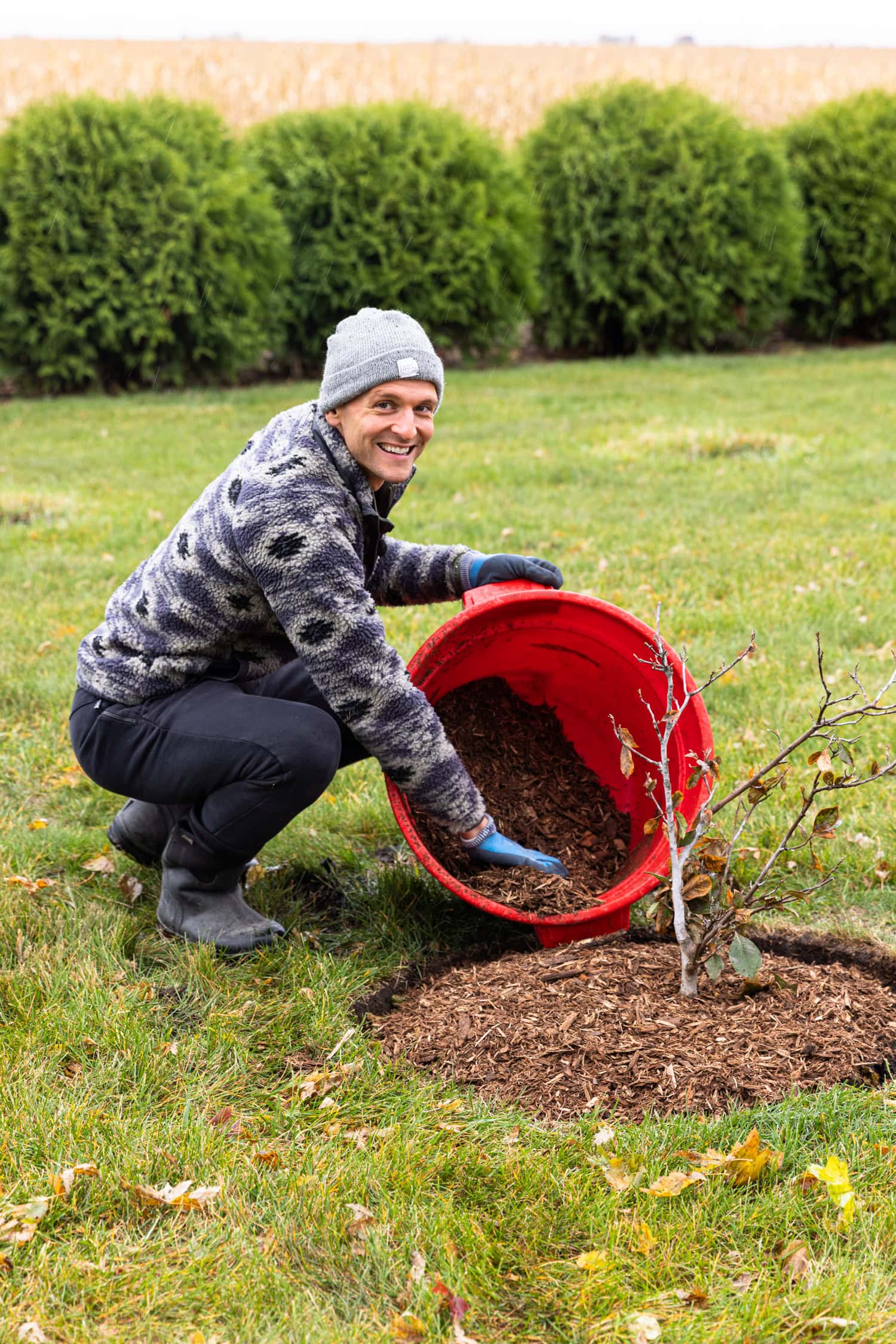
- After planting – Always add mulch after you’ve planted. But don’t add it first, or you’ll mix soil into the mulch as you dig, which brings soil on top of the mulch. If you have a finished flowerbed and then add a plant, pull back the mulch before digging the new hole for the plant. Add the plant, then push the existing mulch back around it.
- Fall – A perfect time to lay down the leaf variety. I use it on flower beds, garlic, shallots, and even dormant rhubarb (lightly).
Should You Replace Mulch Every Year?
You don’t need to dump a new batch on your beds every year. In fact, please don’t. Here’s what I do:
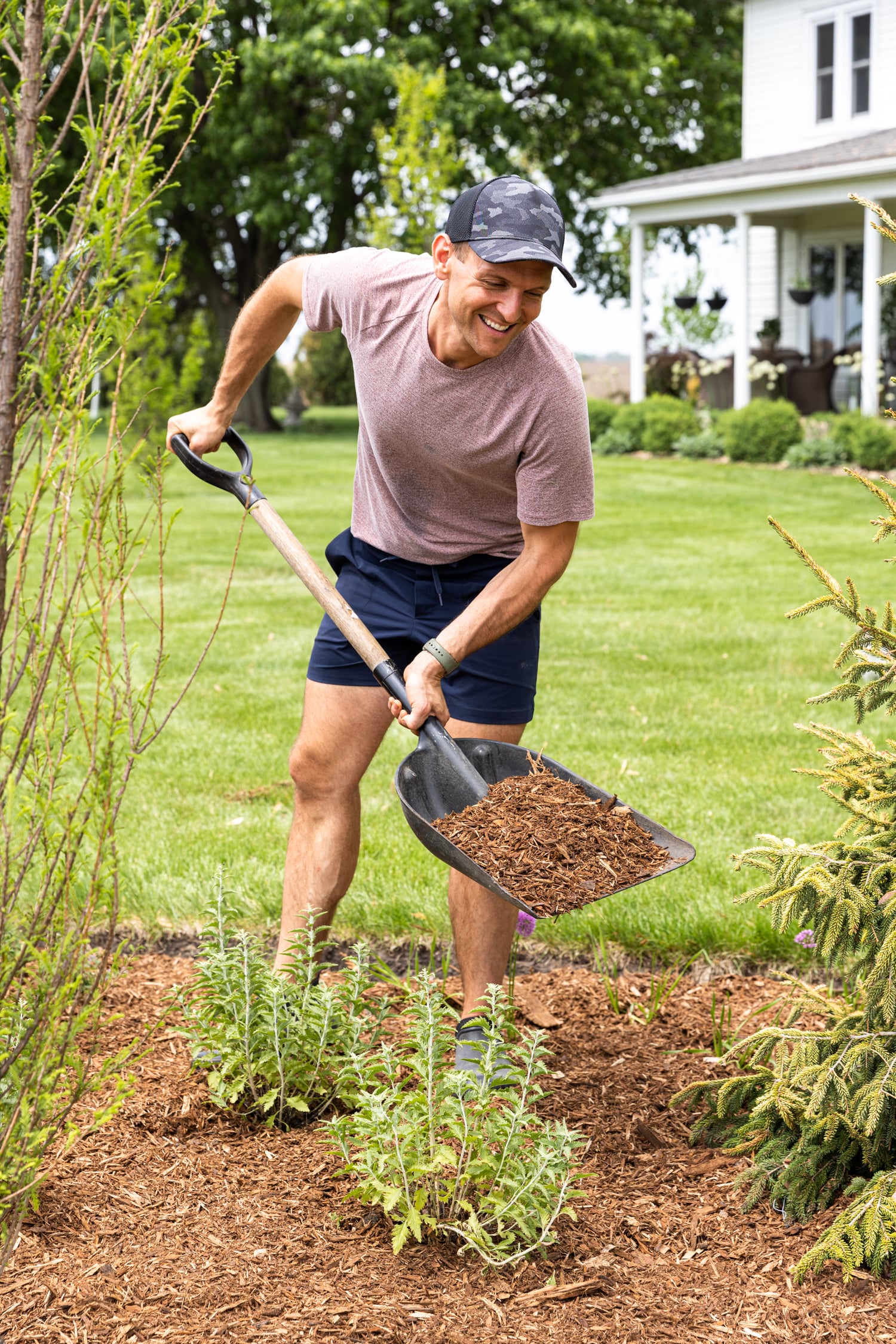
- If you still have a good layer (2-3 inches), use a hard rake to freshen it up.
- Raking breaks up any crusted layers and keeps it looking tidy without smothering plants.
- Only add new mulch when levels get low.

Why I Skip Landscape Fabric
If you’re using organic mulch, like wood chips or compost, skip the landscape fabric. It stops the mulch from composting into the soil, and it becomes a mess over time as soil builds up on top of the fabric.
Let Perennials Mulch Themselves
My ultimate goal with most beds is to let the perennials grow in so well that they shade out the weeds and mulch themselves. Until then, a little bit goes a long way.
How Much Bagged Mulch Do You Need?
If you’re buying it in bags:
- 2 cubic feet will cover ~12 sq ft at 2 inches deep
- 2 cubic feet will cover ~8 sq ft at 3 inches deep
Measure your beds, do the math, and save yourself a second trip to the store.
Quick Mulch Guide
What to Remember Every Season
✔️ Use untreated, all-natural mulch – No dyes. No synthetic chemicals. Just real wood or shredded leaves.
✔️ Keep the layer thin – 2-3 inches max; keep away from stems and trunks (always expose the root flare!)
✔️ Refresh (don’t replace) each year – Rake old mulch to break up clumps and give it new life. Add more only if it’s thinned out.
✔️ Compost is for feeding. Mulch is for covering – Compost = nutrients and soil health. Mulch = moisture retention and weed suppression.
✔️ Best times – Spring after planting; Fall for insulation over garlic, shallots, and flowerbeds
My tip – Aim for perennial beds that mulch themselves as plants fill in!
Frequently Asked Questions
For most flower beds, use untreated hardwood mulch for a tidy, formal look. For more natural beds, compost is ideal. It feeds the soil while still helping suppress weeds.
2-3 inches is ideal, but always keep it pulled back from the trunk to expose the root flare. Never volcano mulch!
Absolutely. Shredded or mowed leaves make excellent mulch, especially in fall vegetable beds. They insulate, compost down over the winter, and are organic.
Not usually. If the mulch is still 2-3 inches thick, rake it up to break up clumps and refresh the look. Only add more if it’s thinned out.
Not recommended. It prevents composting and can become a maintenance issue. Save fabric for under rock or gravel if needed.
Spring and fall are both great. In spring, mulch after planting perennials. In the fall, mulch garden beds with leaves or wood chips to insulate them for winter.
Measure your bed’s square footage. A 2-cubic-foot bag covers about 12 sq ft at 2 inches deep or about 8 sq ft at 3 inches deep.
Compost is nutrient-rich organic matter that improves the structure and fertility of soil. Mulch sits on top of the soil to suppress weeds, retain moisture, and regulate temperature. Ideally, mulch eventually breaks down and becomes compost, too, but they serve different roles in the garden. Make sure to watch my video about the differences between the two!
Mushrooms or mold can grow when mulch stays too damp or is laid too thick. It’s not harmful, but rake it to improve air circulation and avoid piling it more than 3 inches deep.
You can, but let them dry first. Fresh clippings can mat down, create an odor, or even burn plants. Mix with leaves or spread thinly.
The cedar variety lasts longer and naturally resists pests, but it breaks down slowly. It’s great for areas where you’re not digging much, but compost or hardwood is better for beds where you’re frequently planting.
In areas where termites are an issue, it can talk with local professionals about the best options.
Yes. Dyed mulch often contains synthetic colorants and is sometimes made from chemically treated wood. Stick with natural, untreated versions for healthier soil.
Conclusion
At the end of the day, mulch is all about helping your garden work smarter. It locks in moisture, keeps weeds down, and adds organic matter back to the soil. And when done right, it looks good too.
So go put some down! Your plants will thank you.