

This post may contain affiliate links. If you make a purchase through links on our site, we may earn a commission. Please read our disclosure policy.

Why I Love Growing Tomatoes
In our family, tomatoes have always been the plant that connects the generations. Growing up, there was never just one way to plant tomatoes; there was just the way my family did it, from my mom to my grandma, all the way back to my great-grandma. Some years, that meant laying them sideways in a trench; other years, planting them deeply in a hole. But the goal was always the same: build a strong root system and set the plant up for success.
For so many of us, tomatoes are the epitome, and the one plant that makes us feel like a real gardener. And that’s because there’s nothing quite like picking that first tomato in the middle of summer and remembering exactly why you took all that time in the spring to make it worth it.
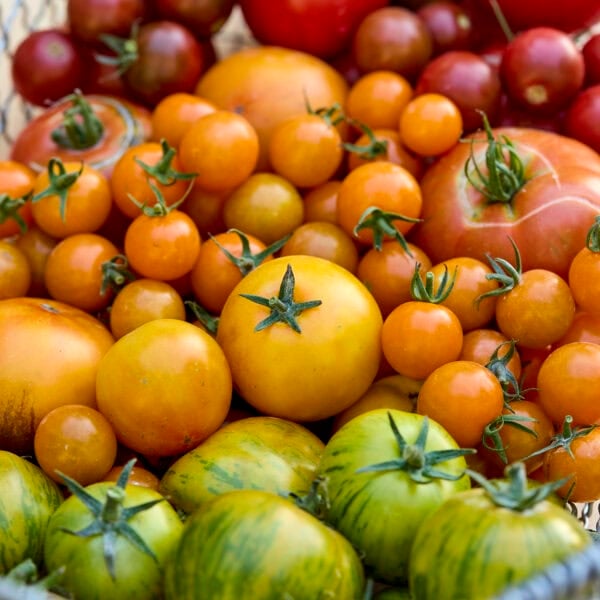
You can grow a big heirloom version for sandwiches, a paste tomato for canning, or a cherry tomato to snack on right in the garden (nothing better than this!). By late summer, they become the ingredient in so many ways: BLTs, fresh tomato salads, salsa, spaghetti sauce, juice, and all the jars I line up in my basement pantry.
Growing tomatoes successfully comes down to a few simple things: plant them deep, support them well, and stay ahead of disease before it starts. Once you understand what tomatoes want — warmth, sun, airflow, and even moisture — they become one of the most rewarding crops in the summer garden.
Table of Contents
- Why I Love Growing Tomatoes
- Before You Plant
- When to Plant Tomatoes
- How to Plant Tomatoes
- Give Tomatoes the Room They Need
- Support Tomatoes Early
- Watering Tomatoes the Right Way
- Mulch Matters More Than People Realize
- Pruning Tomatoes: What to Remove and What to Leave
- How to Feed Tomato Plants
- Common Tomato Problems and What They Usually Mean
- Growing Tomatoes in Containers
- When and How to Harvest Tomatoes
- Final Thoughts
- Frequently Asked Questions
- More About Gardening
Before You Plant
Tomatoes grow best when planted in well-draining soil and in full sun, with at least 6 hours of direct sunlight per day. They also do best when planted where tomatoes, peppers, potatoes, and eggplant have not grown for the last few years, because crop rotation helps reduce soil-borne diseases.
- If you’re starting from seed, sow them indoors about 6 weeks before planting outside.
- If you’re buying starts, choose stocky, dark green plants without fruit already forming.
This is also the point where it helps to decide what kind of tomato you want:
- Determinate tomatoes stay more compact and set most of their fruit over a shorter window. These are often great for canning, smaller gardens, and containers.
- Indeterminate tomatoes keep growing and producing until frost, and they usually need sturdier support and more room. Most heirlooms fall into this second camp, which is why they can turn into large plants by August.
The simplest way to choose varieties to grow is by how you want to use them:
- Paste tomatoes, like Amish Paste or Roma types, for sauce, salsa, and canning.
- Slicers and beefsteaks for sandwiches and fresh eating.
- Cherry tomatoes for snacking and container growing.
- Heirlooms for flavor and color.
When to Plant Tomatoes
Tomatoes are warm-season plants, and this is where many gardeners get into trouble. The mistake is almost always planting too early. Tomatoes should be planted outside after the danger of frost has passed and the soil has warmed to 65°F to 70°F. For me in Iowa, that’s typically early to mid-May, though local weather always wins. Seedlings should also be hardened off first, which means gradually exposing them to outdoor sun and gentle wind over several days.
For me, this means waiting until the nights stay warm. Tomatoes just do not love cold soil or chilly evenings, and if you plant a little later in truly warm weather, they often catch up fast.
How to Plant Tomatoes
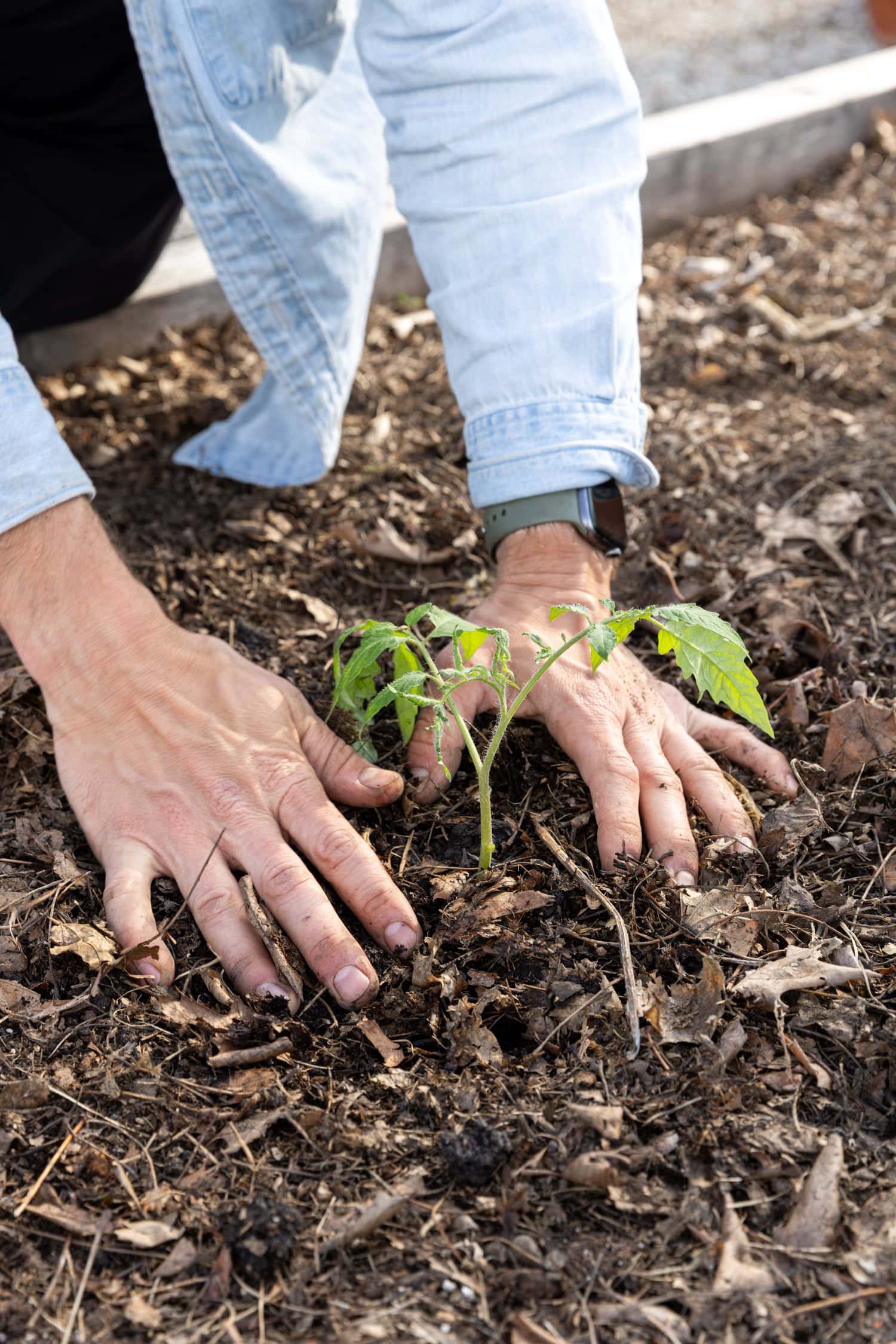
This is the number one rule to growing strong tomato plants: plant them deep. Tomatoes are unusual because they can form roots all along their buried stem. That means the deeper you plant them, the more root system they can build, and that extra root structure gives you a sturdier, stronger plant.
Here’s the planting method that I use:
- Dig a deep hole or a shallow trench – If the seedling is tall and leggy, either plant it deeply in a hole or remove the bottom leaves and lay it sideways in a trench. Both methods bury more of the stem, and both encourage more roots.
- Remove the lower leaves – Anything that would sit below or within a few inches of the soil line should come off.
- Add fertilizer thoughtfully – Tomatoes are heavy feeders, but this is not a place to overdo nitrogen. Too much nitrogen creates big leafy plants that are slower to bear fruit. A balanced organic tomato fertilizer at planting makes sense, especially if your soil is not especially rich.
- Plant deeply and firmly in the soil – Set the plant down to the first true leaves, or bury the stem in a trench and gently bend the top upward. Press the soil around it well.
- Water well – After planting, water thoroughly to settle in the roots. From there, the goal is not constantly soggy soil. Tomatoes like consistent moisture, but they do not want to sit in wet soil.
Give Tomatoes the Room They Need
Crowding tomatoes is one of the fastest ways to invite disease and frustration, so it’s best to give them the right space based on how you plan to support them. Both determinate and indeterminate tomatoes do best when staked or caged. Determinate tomatoes should be planted 2-3 feet apart. Indeterminate tomatoes need more room and should be planted 3-4 feet apart. Plants left to sprawl need even more room.
The reason is simple: better airflow, better light penetration, easier harvest, and less disease pressure.
I prefer to give indeterminate tomatoes generous space because by midsummer, they’re a whole system of stems, leaves, and fruit that need light and air to move through.
Support Tomatoes Early
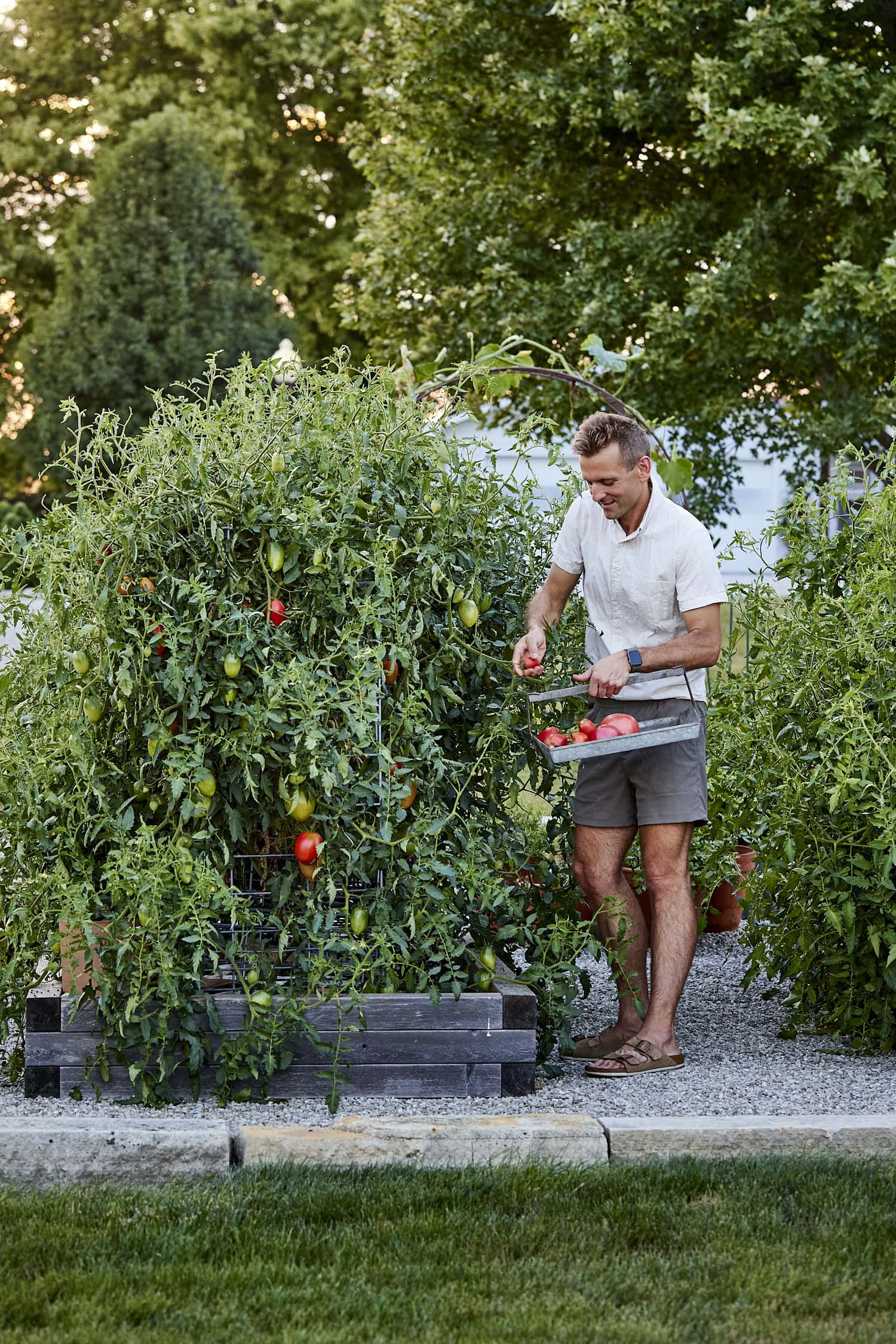
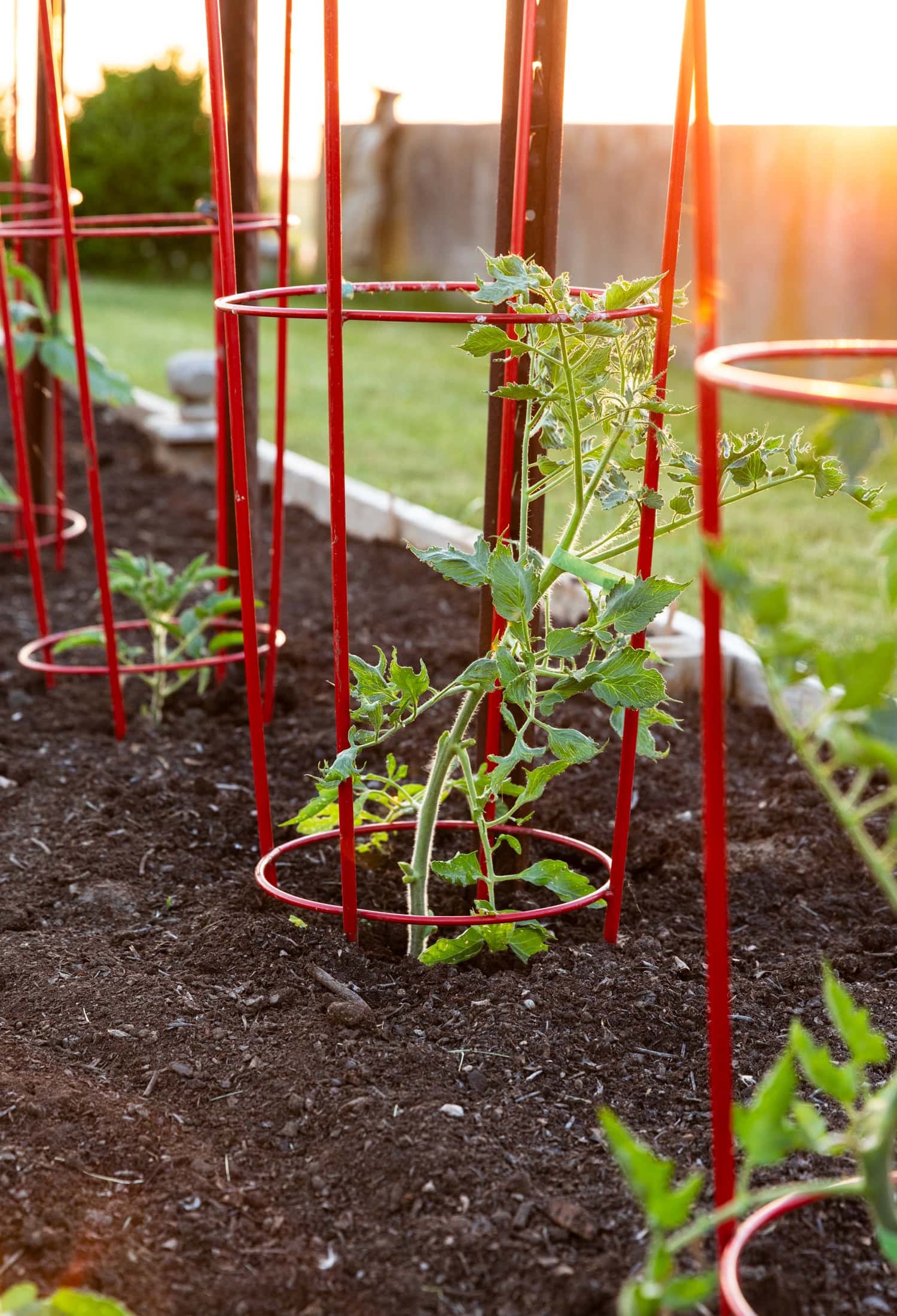
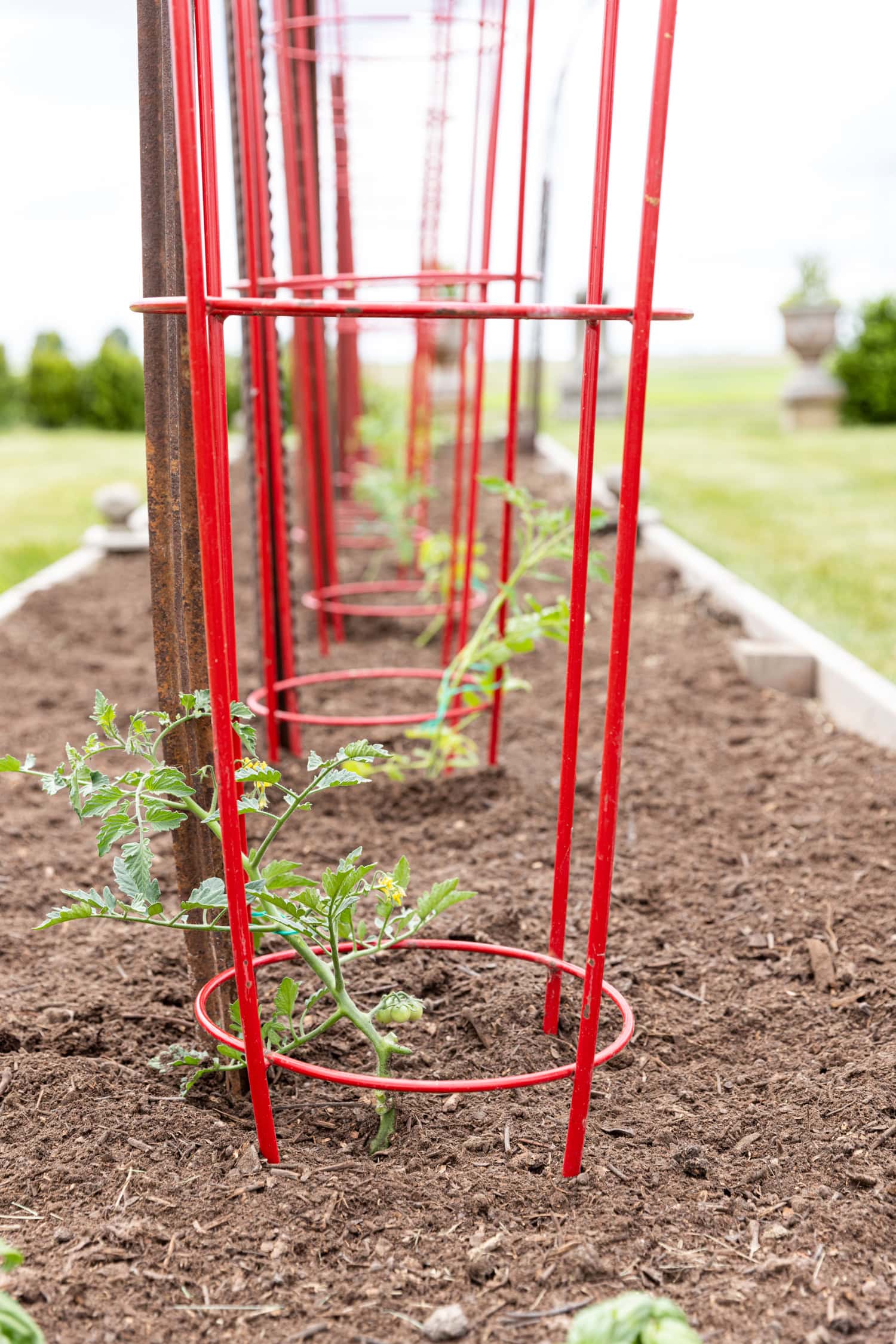
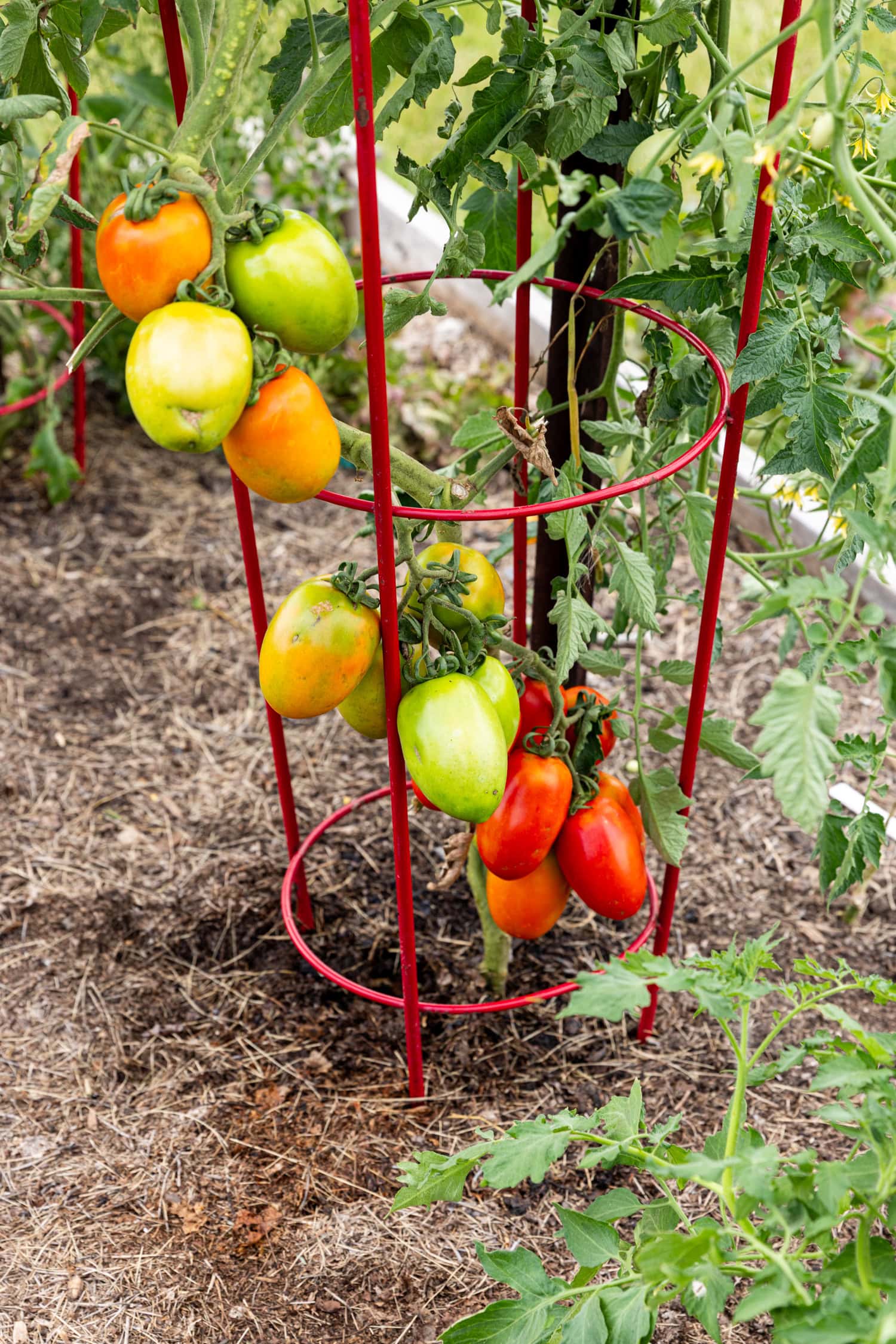
If you wait until tomatoes are huge to support them, you’re already behind. Shortly after planting, supports should be installed. Training tomatoes improves air circulation, keeps fruit off the ground, makes the plants easier to pick, and often improves fruit quality.
Use whatever sturdy system works for your garden:
- Tall tomato cages
- Stakes
- Trellises
- A cage anchored to a T-post or U-post in windy places (that’s my situation in Iowa)
The exact support is less important than the strength of it. If you garden in an open, windy spot as I do, anchoring the cage to a post can be the difference between a thriving plant and one toppled in the first summer storm.
Watering Tomatoes the Right Way
Tomatoes want consistent soil moisture, which means not over- or underwatering them. This translates to deep watering, about 1 inch per week. If you have sandy soil and are dealing with hot weather, you’ll need to water more frequently. Water at the base of the plant, ideally in the morning, and avoid splashing soil or soaking the leaves.
A few things make a big difference:
- Water deeply, not lightly.
- Water the soil, not the foliage.
- Let the weather be your guide. During extreme heat, check the plants more.
- Be especially consistent once fruit is forming.
A lot of tomato problems are really watering problems disguised as something else. Uneven moisture can contribute to blossom end rot, fruit cracking, stress, and poor fruit quality.
Mulch Matters More Than People Realize
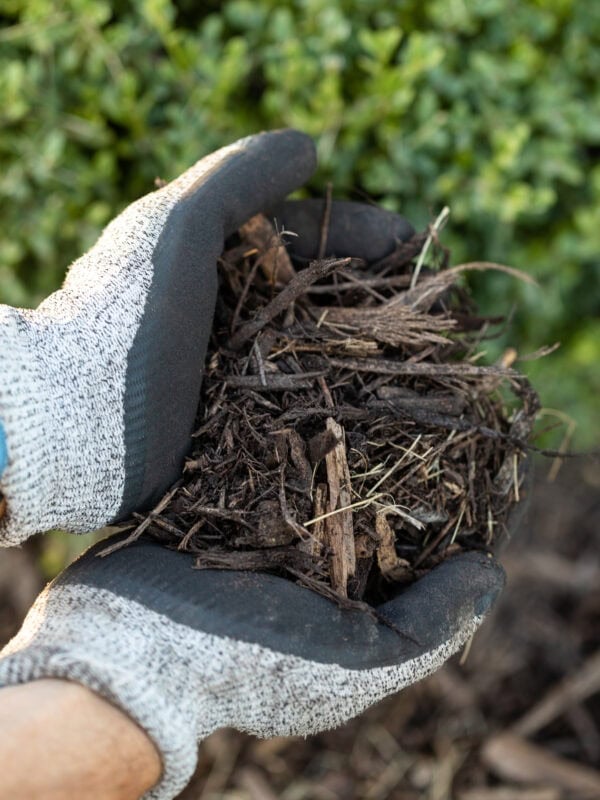
If there’s one thing that works to save tomato plants, it’s mulching. Apply mulch so that it reduces soil splash, suppresses weeds, conserves moisture, and reduces the risk of disease spores splashing onto lower leaves. Straw, shredded leaves, or compost can all work.
I use a 1- to 2-inch layer of compost-like mulch around the base of the plant. It feeds the soil a bit, holds moisture, and creates a clean barrier between the plant and the soil that tomatoes really benefit from.
Pruning Tomatoes: What to Remove and What to Leave
This is where tomato growing gets controversial, but the key is knowing what kind of plant you have.
For indeterminate tomatoes, pruning suckers is helpful. Suckers are the little shoots that grow in the “Y” created between the main stem and a branch. If left in place, they become whole new stems, which can make the plant crowded and reduce airflow and light penetration.
For determinate tomatoes, do not prune suckers the same way. Generally, you only want to do some bottom pruning, not full sucker removal.
A good practical pruning routine looks like this:
- At planting – Remove any leaves that will touch or come within 4 inches of the soil.
- Once the plant is established – Remove the lower leaves from the bottom portion of the plant, up to about the first flower cluster or roughly the lowest 12 inches, depending on plant size. This helps reduce soil-borne disease splash.
- Through the season, for indeterminate tomatoes – Nip out suckers while they’re still small. This keeps the plant more open, easier to support, and easier to ripen.
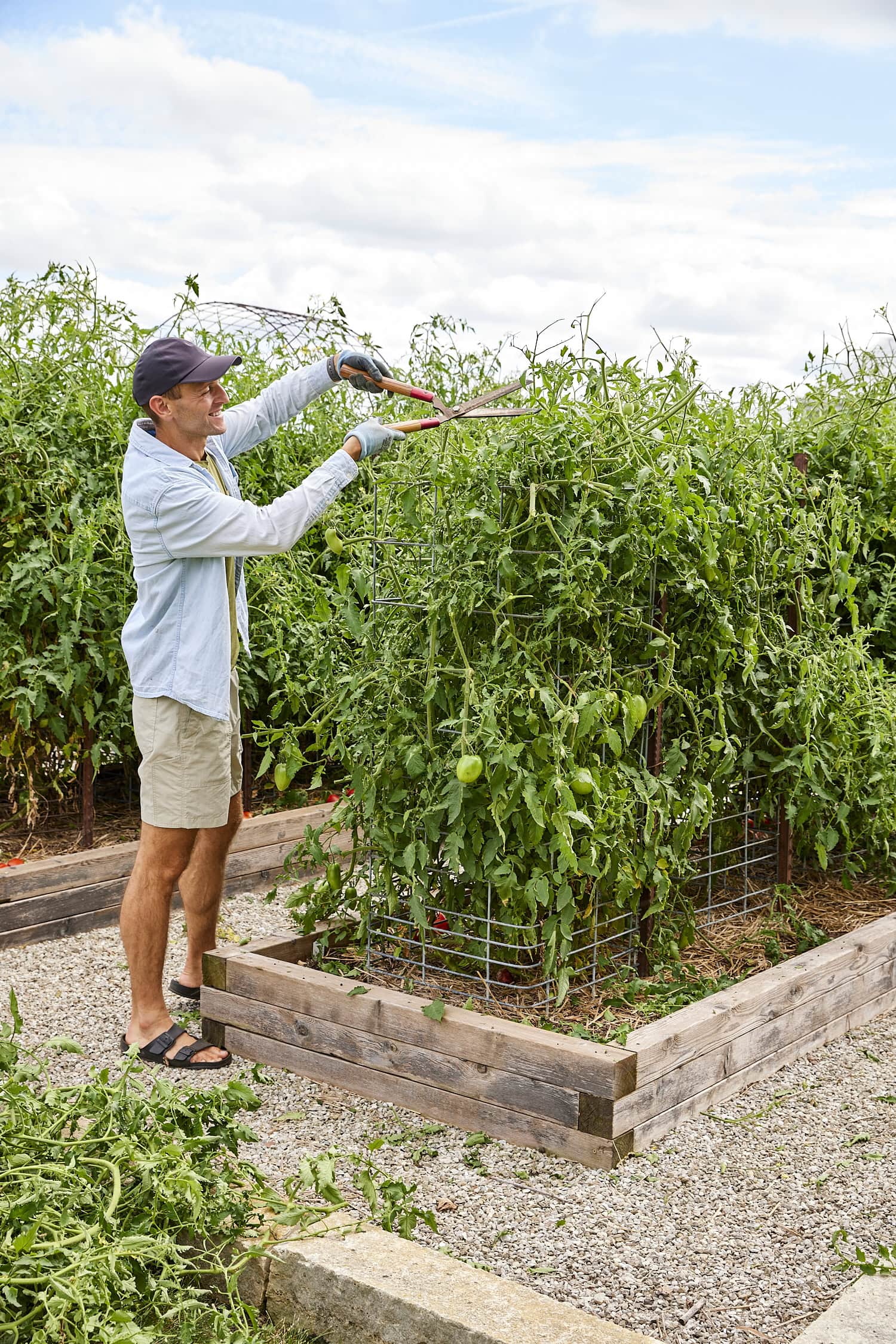
- Late in the season – As frost approaches in shorter-season climates, stop asking the plant to make more tomatoes it cannot finish. Thus, it can be a good idea to remove late blossoms and immature fruit that will not ripen before frost. I take it a step further and often cut back excess new growth, sometimes by a third, so the plant puts its energy into ripening the tomatoes it already has.
How to Feed Tomato Plants
Tomatoes are hungry plants, but the goal is a steady, healthy plant, not one that’s overfed. Too much nitrogen leads to lots of foliage and slower fruiting. Fertilize according to the soil’s needs, and feed again as the fruit begins to enlarge.
For me, that means building healthy soil first, then supplementing with an organic tomato fertilizer when planting. If needed, you can follow up with more during the season. Healthy soil gives you healthier plants, and healthier plants handle stress better.
Common Tomato Problems and What They Usually Mean
Blossom end rot – This shows up as a dark spot, which is usually sunken, on the blossom end of the fruit. It can be tied to a calcium deficiency in the developing fruit, but that does not necessarily mean your soil lacks calcium. Uneven watering, root injury, rapid growth, and too much nitrogen are common contributors. The best fix is consistent moisture, mulch, and not overfertilizing.
Fruit cracking – Cracking usually happens when tomatoes take in a rush of water after a dry spell. Large beefsteak types are often more prone to it. The best prevention is even moisture and mulch. If you tend to get cracking, it also helps to pick fruit just before it is fully ripe and let it finish indoors.
Early blight and other leaf diseases – Tomato diseases are less about one magic cure and more about a system: crop rotation, mulch, bottom pruning, good spacing, keeping foliage dry, watering at the base, and staking or caging to improve airflow. Remove spotted lower leaves promptly and clean up plant debris in the fall.
A plant that looks huge, but will not ripen fruit – Usually, that means too much growth and not enough light moving through the plant. On indeterminate tomatoes, pruning suckers and opening the canopy can help redirect energy and improve ripening.
Growing Tomatoes in Containers
If you don’t have a garden, tomatoes are still a great crop to grow! Choose a determinate variety or a smaller-fruited tomato for containers, planting one tomato per container and using at least a 5-gallon pot; a larger pot is even better for larger plants. Containers also need frequent, even watering and reliable drainage.
A few container rules to remember:
- Use a large, sturdy pot with drainage holes.
- Use a quality potting mix, not topsoil.
- Support the plant well.
- Expect to water much more often than in the ground.
- Do not let the container dry out completely. Containers dry quickly and often need close watching, sometimes daily watering in warm conditions.
When and How to Harvest Tomatoes
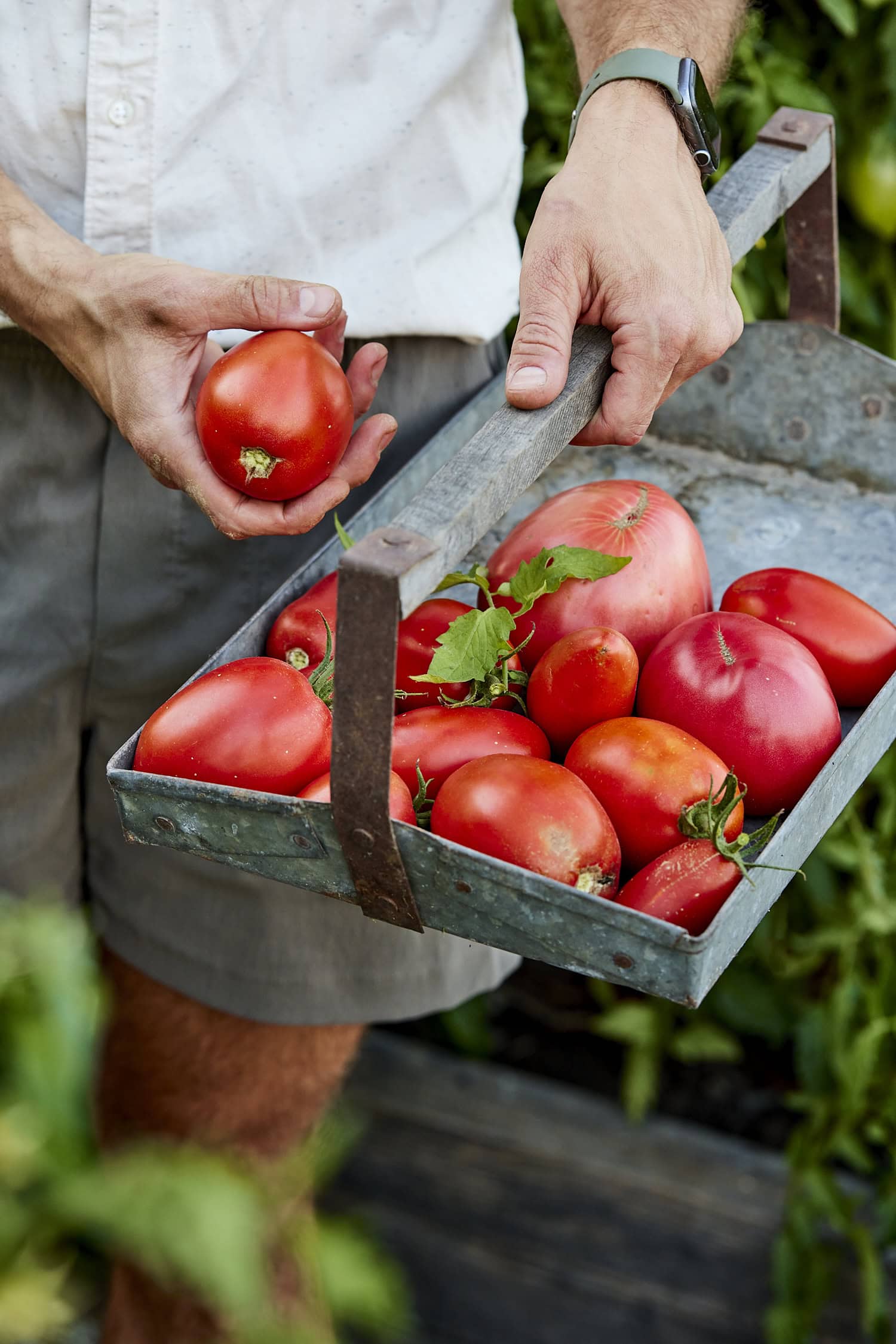
Fully ripe tomatoes should have their mature color and give slightly when gently pressed. Tomatoes are best when allowed to ripen fully on the plant, though mature green fruit can be picked before frost and ripened indoors.
Here’s my advice for heirlooms and big slicers: pick them just a bit before they’re fully ripe if you tend to deal with cracking. A tomato that is already coloring and fairly firm will usually finish ripening beautifully indoors, and it’s much easier to keep an eye on it there than to split open on the vine.
If frost is coming, harvest mature green fruit and let it ripen inside. You can wrap individual green tomatoes in newspaper and store them in a cool, dark place, then move them to room temperature as they color.
Final Thoughts
Tomatoes are just one of a number of plants that will teach you how to garden. You learn patience in spring, how to water correctly, and a little confidence when it comes to pruning. Before you know it, all at once, you’re standing in the garden in August with an armful of tomatoes, wondering what recipe to make first.
And that’s the best part! Tomatoes will meet you wherever you like to garden. Whether it’s a big raised bed, an in-ground garden, or one pot on a patio. Just remember the rules: plant them deep, give them the support they need, make sure the foliage is clean and open, and keep up with watering. Then let summer do its work.
Frequently Asked Questions
It depends on your climate, but the right timing is after frost danger has passed and the soil has warmed to 65°F to 70°F. In Iowa, that is often early to mid-May.
It depends. If you planted indeterminate tomatoes, the answer is yes. If you planted determinate tomatoes, the answer is not the same. Determinate plants generally only need lower-leaf cleanup to keep leaves from touching the soil.
A common target is about 1 inch of water per week, applied deeply, but frequency depends on soil and weather. Containers need much closer watching and could require daily watering.
Yes. Choose a determinate or smaller tomato, plant one plant per large pot, and stay consistent with water and support.
Usually, it’s because of wide swings in soil moisture, especially after a dry stretch followed by heavy rain or deep watering.
You cannot control the weather, but you can reduce risk with crop rotation, mulch, base watering, good spacing, bottom pruning, and support.