


This post may contain affiliate links. If you make a purchase through links on our site, we may earn a commission. Please read our disclosure policy.
Jams, jellies, and preserves are all variations on the combination of fruit and pectin to create a wonderful spread. The difference between each is the form and function the fruit takes:
- Jelly is made from fruit juice and has none of the “pieces.”
- Jam is created from crushed fruit and thus has a pulpy texture.
- Preserves have chunks of fruit.
I’m going to throw in another category that many may not be used to: fruit butter! This is a completely different concept for preserving fruit, but it has become one of my personal favorites. It’s thick, smooth, sweet, and utterly delectable. As a bonus, it’s easy and fast, with a nearly foolproof recipe consisting of just two ingredients:
- 4 cups fruit
- 4 cups sugar
This can be adapted to any measurement or amount of fruit you have. Just make sure to remember the mantra of equal parts sugar to fruit, and you’re ready! This may sound too good to be true, but it isn’t. Fruit butter will be a different consistency than the jams and jellies you may be accustomed to. While jelly has an almost gelatin quality, fruit butter is somewhat thinner but packed with so much more of the fruit flavors.

NOTE: This recipe can be adapted for many different fruits. I find it best for grape butter, apricot butter, and peach butter.
You cannot have a more easy or simple way to preserve your fruit for use as spreads and in recipes. This apricot butter is a great way to prolong the best part of the summer season: the bounty the earth provides. Just a warning, though: your friends will want to know where to find it, and you’ll have the privilege of showing off your kitchen skills. Enjoy!
If you make this recipe, make sure to leave me a comment and a rating of the recipe so I know how it worked out for you! You can also tag me on Instagram with a picture of the final product.
Apricot Butter
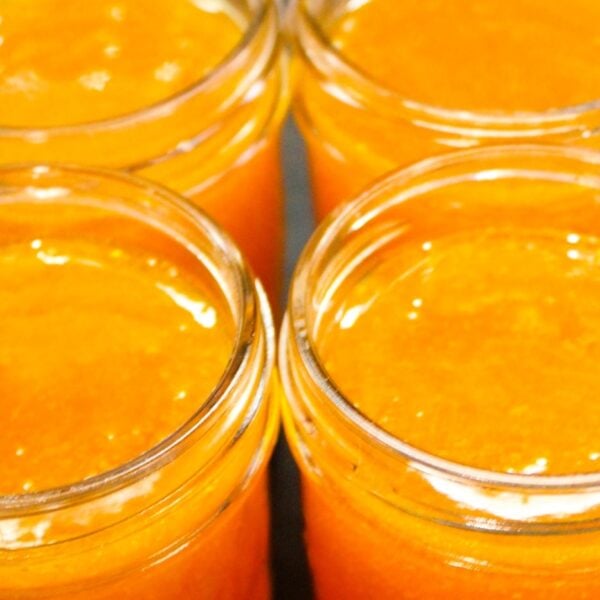
Equipment
- 4 jam jars
Ingredients
- 4 cups sliced apricots unpeeled
- 4 cups granulated sugar
Instructions
- To start, clean and prepare the fruit. Halve the fruit and remove pits and any abrasions, leaving the peel intact. This is where the flavor comes from. Measure fruit by pressing it into a measuring cup. Do not simply lay fruit in or the measurements will not be accurate.4 cups sliced apricots

- Dump fruit in a heavy-bottomed kettle and add an equal amount of sugar.4 cups granulated sugar
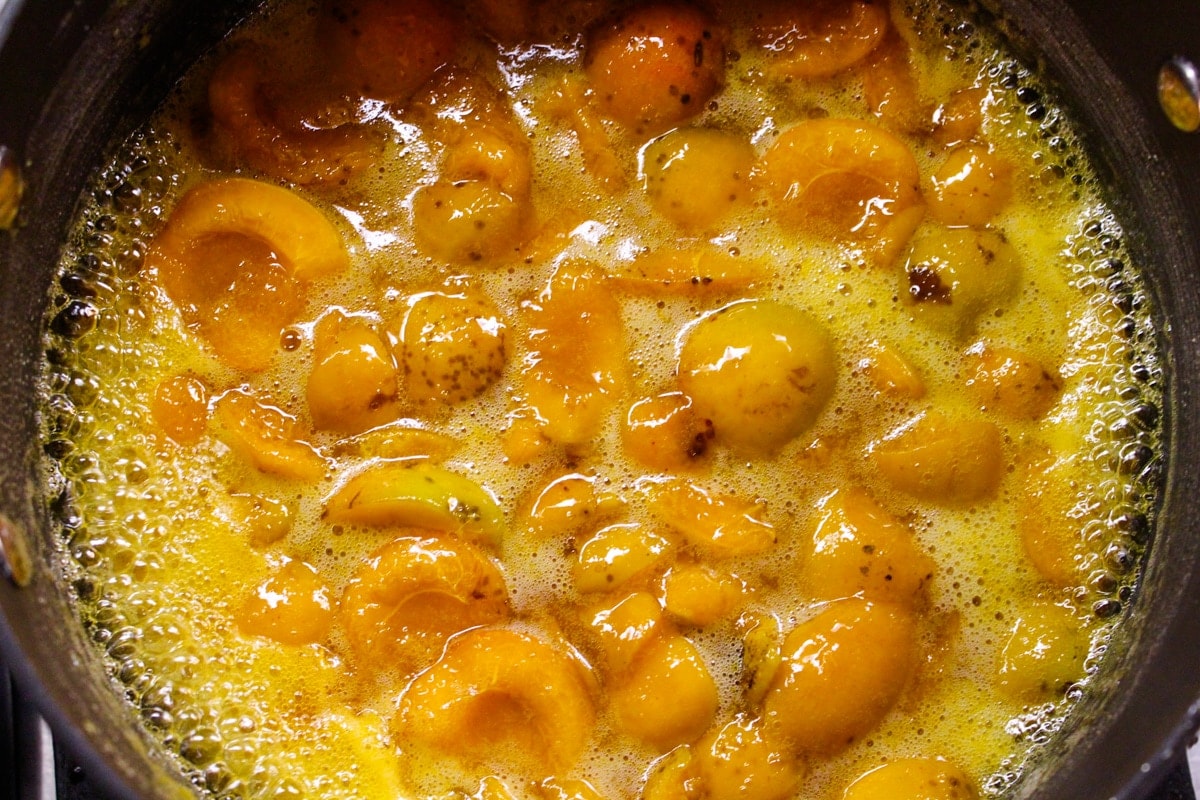
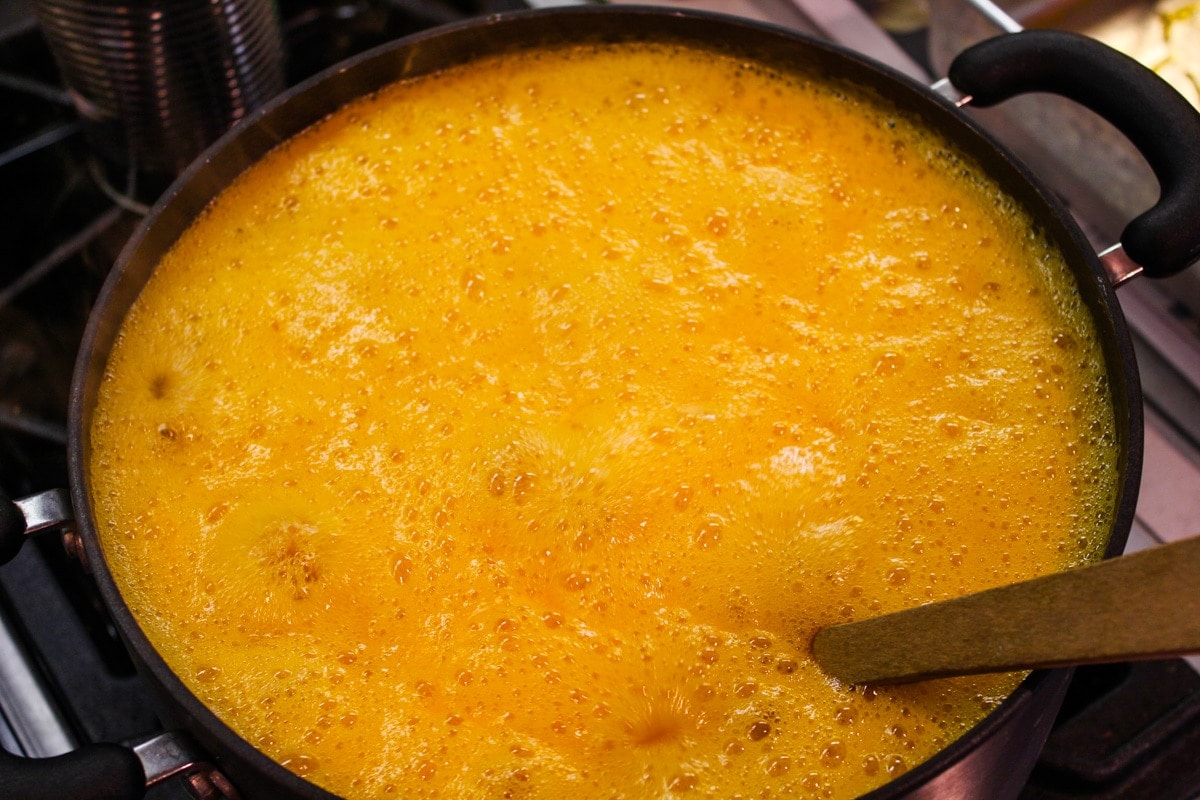
- Turn the heat to medium and stir contents to bring out the natural juices and dissolve the sugar. Increase the heat to medium-high and let the mixture come to a boil. Bring to a rolling boil (a boil that cannot be stirred down), letting the mixture begin to foam.
- Once at a rolling boil, set a timer for 20 minutes. Stir and let boil. While boiling, watch the mixture carefully as it will rise and eventually fall, cooking down and causing the foam to dissipate.
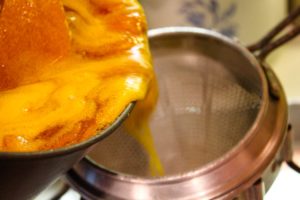
- After 20 minutes, turn off the heat. Pour directly into a conical strainer that has been placed in a container; a 9×13 pan works well. This will hold the butter as it runs out the bottom of the strainer.A conical strainer may be a new utensil for you but is a very tried-and-true multi-purpose canning tool.
- Use a wooden pestle in a circular motion to push the apricot butter through the strainer. Only a small amount of peel and other remnants will be left in the strainer once it has been vigorously pushed through.
- Stir the fruit butter and pour directly into sanitized jam jars.

- Next, either can or use the wax method to seal the jars. To use the wax method, melt wax on a low-heat burner and pour over apricot butter. Lightly swirl to create a seal.




Notes
Nutrition
Nutrition information is automatically calculated, so should only be used as an approximation.

Did you make this? Leave a comment below!





My apricot butter came out really thin, very runny. Is there any way to thicken my butter, now that I have already put it in jars.
Hi Barbara! Apricot butter (or any fruit butter) should be a nice, spreadable texture. When it is warm off the stove or from canning, it will be thin, similar to water when it’s hot. When it has fully cooled, it should be at the correct, spreadable consistency. I hope this helps!
How long do I have the jars in the water bath? I don’t see where it says.
How long does the apricot butter last once canned? Shelf life I mean.
Gonna give this recipe a try.