


This post may contain affiliate links. If you make a purchase through links on our site, we may earn a commission. Please read our disclosure policy.

Why I Love to Make My Own Pie Crust
Pie has gone from being the quintessential American dessert to a lost art. I believe that this is mostly due to many people being scared of pie crust. I hear so many people say how much work it is and how hard it can be to perfect. The crust is an important part, but a truly amazing pie is one where the crust doesn’t take center stage. Instead, it balances the filling perfectly, being not too sweet but oh so flaky.
This recipe is just that: the best pie crust. Slightly sweetened and with the perfect mix of ingredients, science takes over. During baking, the crust becomes oh-so flaky and tender. As a bonus, this is a cinch to make and rolls out like a breeze!
Here’s why this pie crust recipe is the best:
- Uses pantry ingredients that are easy to find.
- Buttery and flaky with the perfect structure.
- Rolls out smoothly, which means there’s no cracking or tearing.
- Freezer-friendly for make-ahead ease. I have a pie crust in my freezer most of the time!
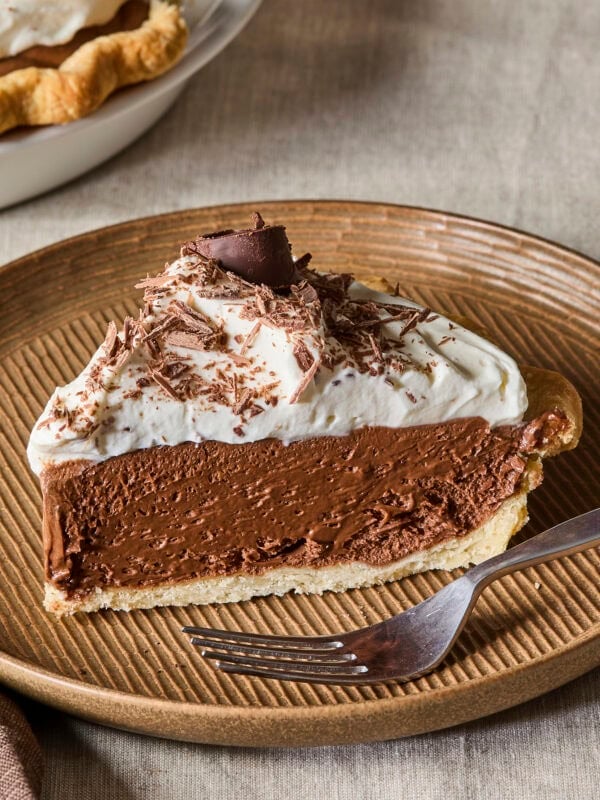
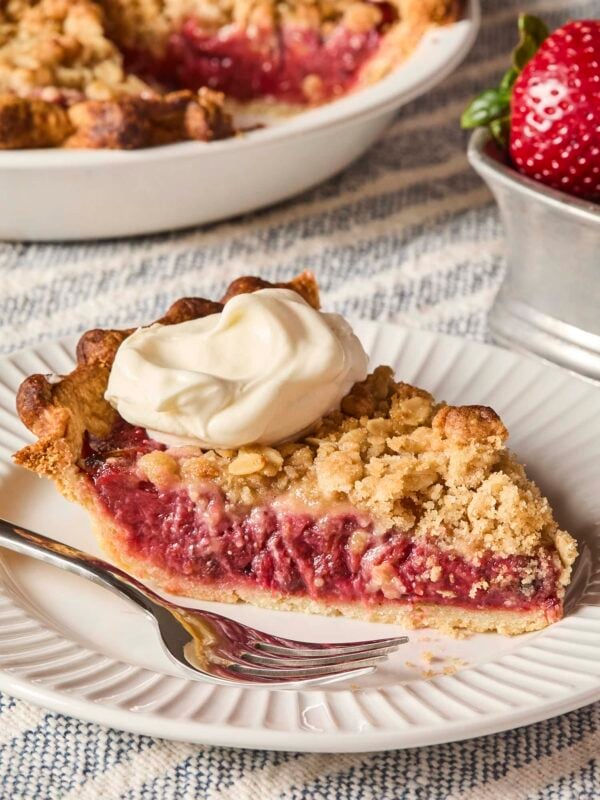
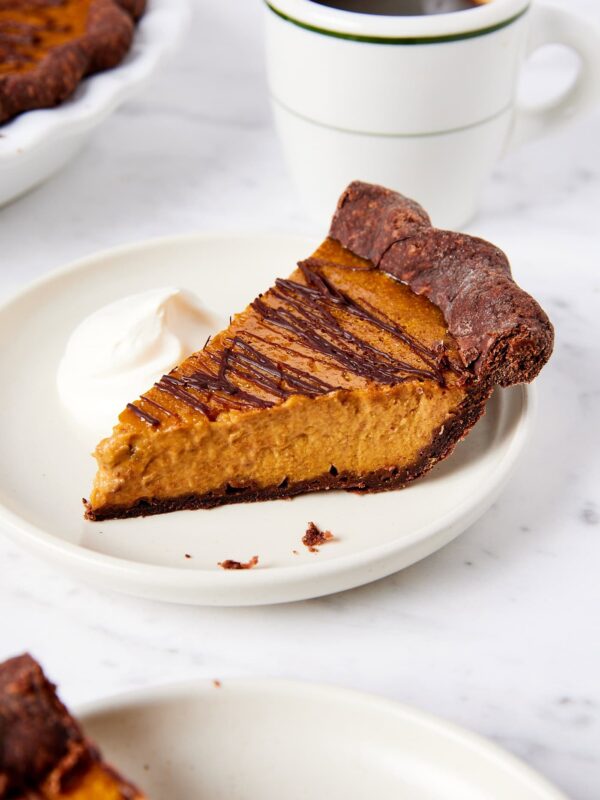
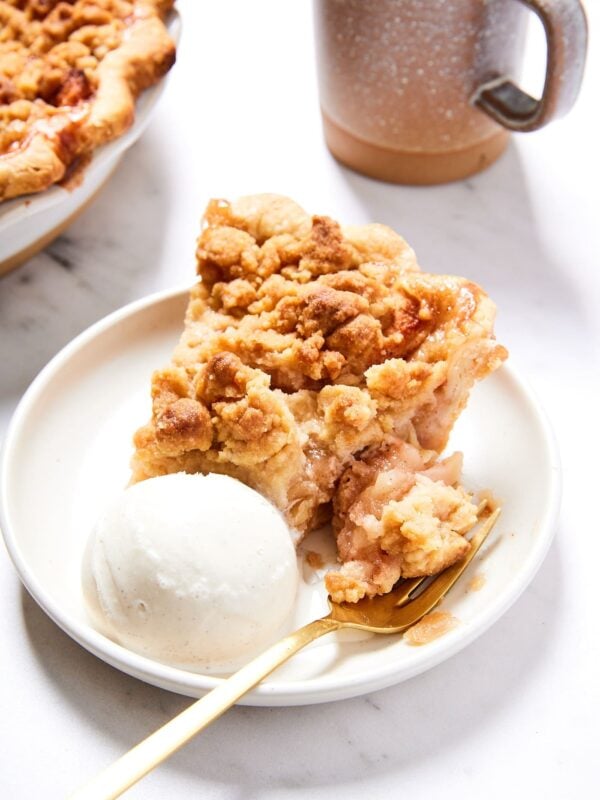
- Perfect for fruit, custard, or even cream pies.
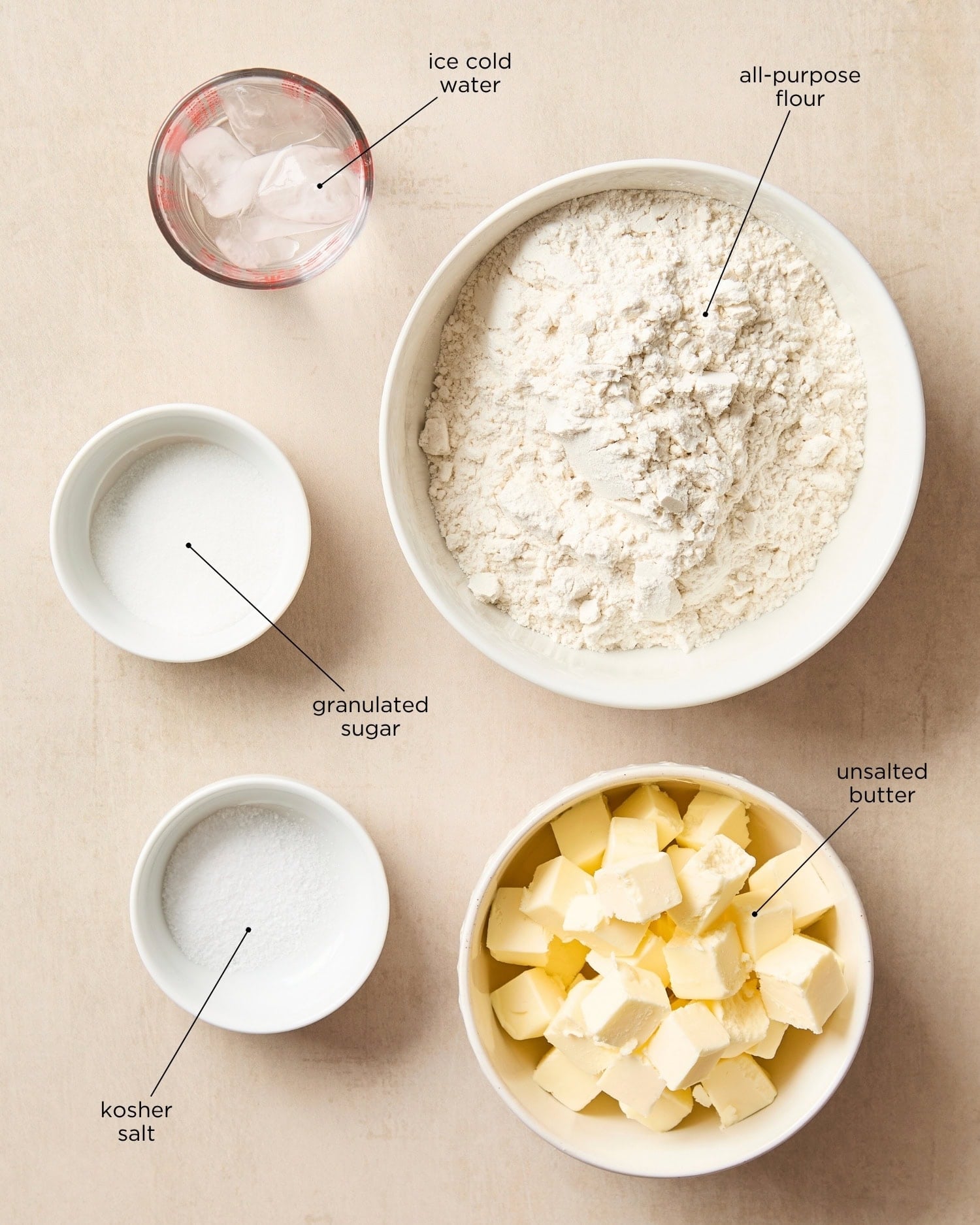
Pie Crust Ingredients
Each ingredient in pie crust matters, so here’s why I use what I do:
- All-purpose flour – The sturdy base of the dough, giving it structure while staying tender.
- Granulated sugar – Just a touch to balance the flavors (the sweetness should come from the filling!).
- Kosher salt – Brings out the buttery flavor and balances the sugar.
- Unsalted butter – Cold and cubed, it adds rich flavor and helps create those flaky layers.
- Ice water – Keeps the dough cold so the butter stays solid until it goes into the oven.
The full amount of each ingredient can be found in the recipe card below.
How to Make This Pie Crust Recipe
A few simple steps make for a perfect recipe of pie dough:
Combine dry ingredients – In a food processor or large bowl, mix together the flour, sugar, and salt.
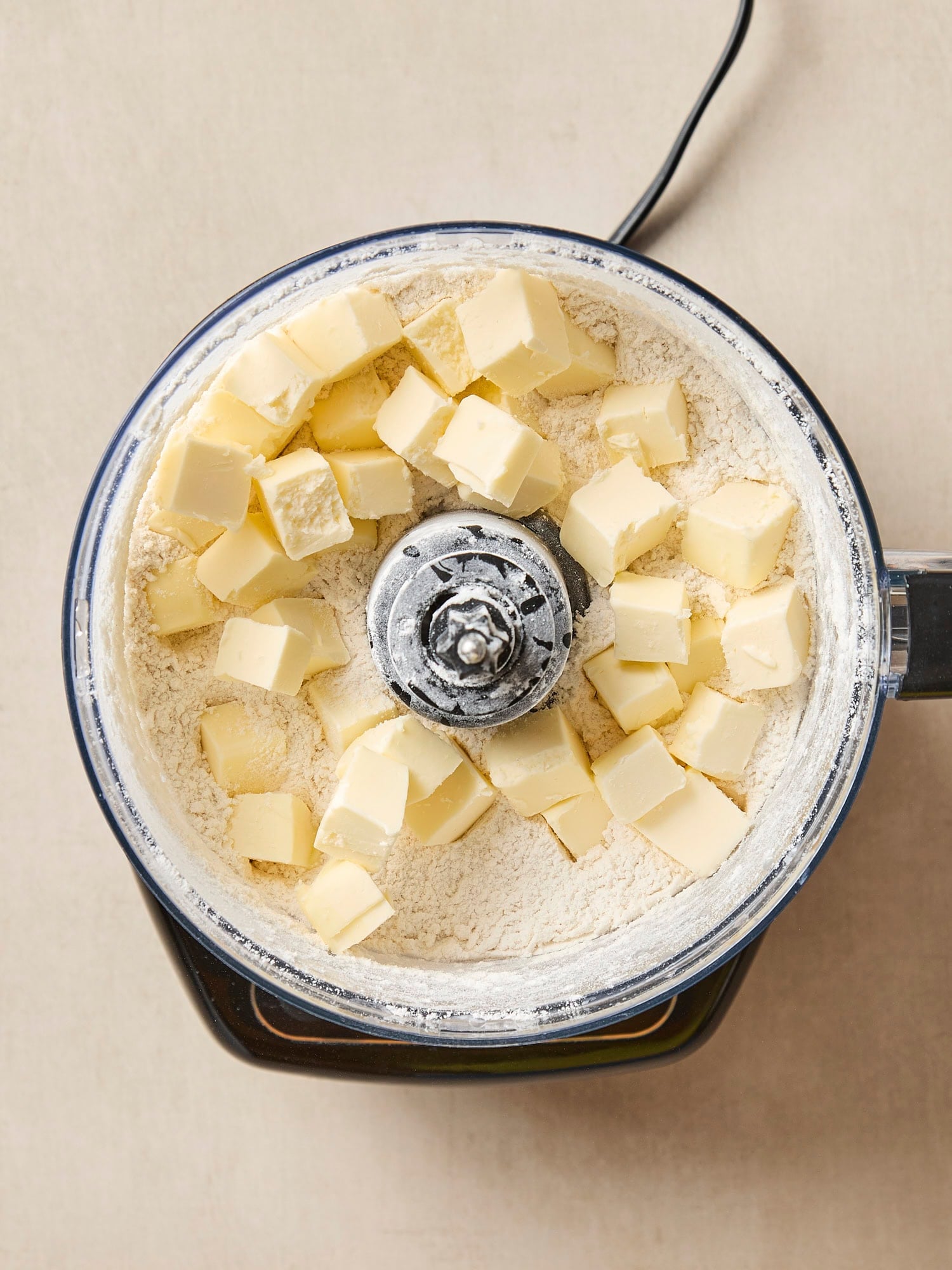
Add cubed butter – Pulse (or cut in by hand) until the mixture looks like coarse meal, with some larger butter pieces about the size of peas or bigger. These uneven bits are what give the crust its flakiness.
Add ice water gradually – Start with a few tablespoons and pulse or stir until the dough just starts to hold together when pressed. Don’t overmix—it should be shaggy and slightly crumbly, but cohesive.
Form into a disc – Pour the dough onto plastic wrap. Use the wrap to gently press it together into a round, flat disc. Don’t knead—this isn’t bread dough!
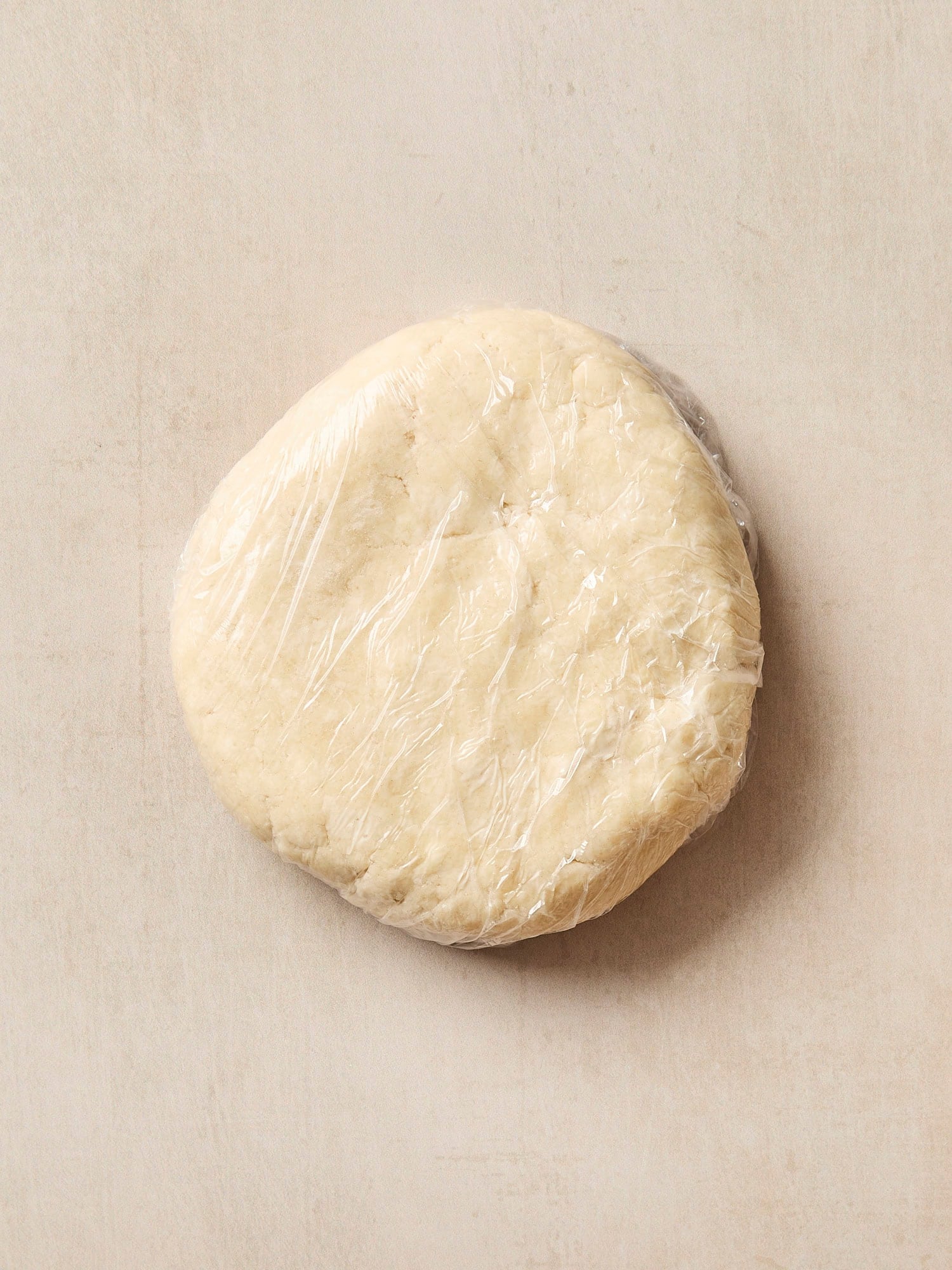
Chill briefly – Pop the wrapped dough in the fridge for 10-15 minutes. Just long enough to firm it up, but not so long that it gets hard and cracks when rolling.
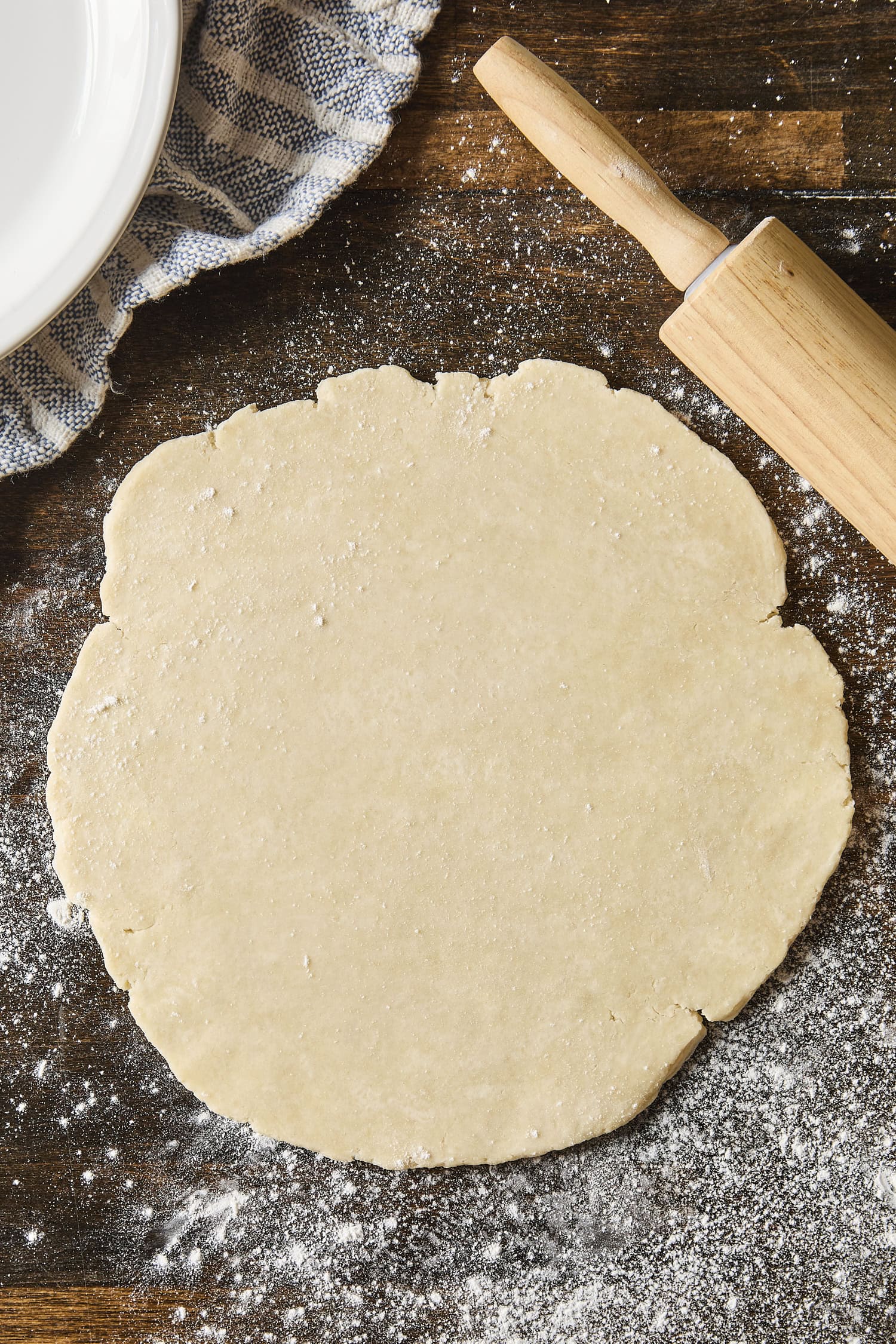
Roll it out – Flour your surface and rolling pin generously. Roll from the center out, rotating the dough as you go to keep a round shape. You’re aiming for a circle about 4 inches wider than your pie plate.
Transfer with care – Gently roll the dough onto your rolling pin, then unroll it over the pie plate. Don’t stretch the dough. Instead, lift and let it naturally fall into the corners.
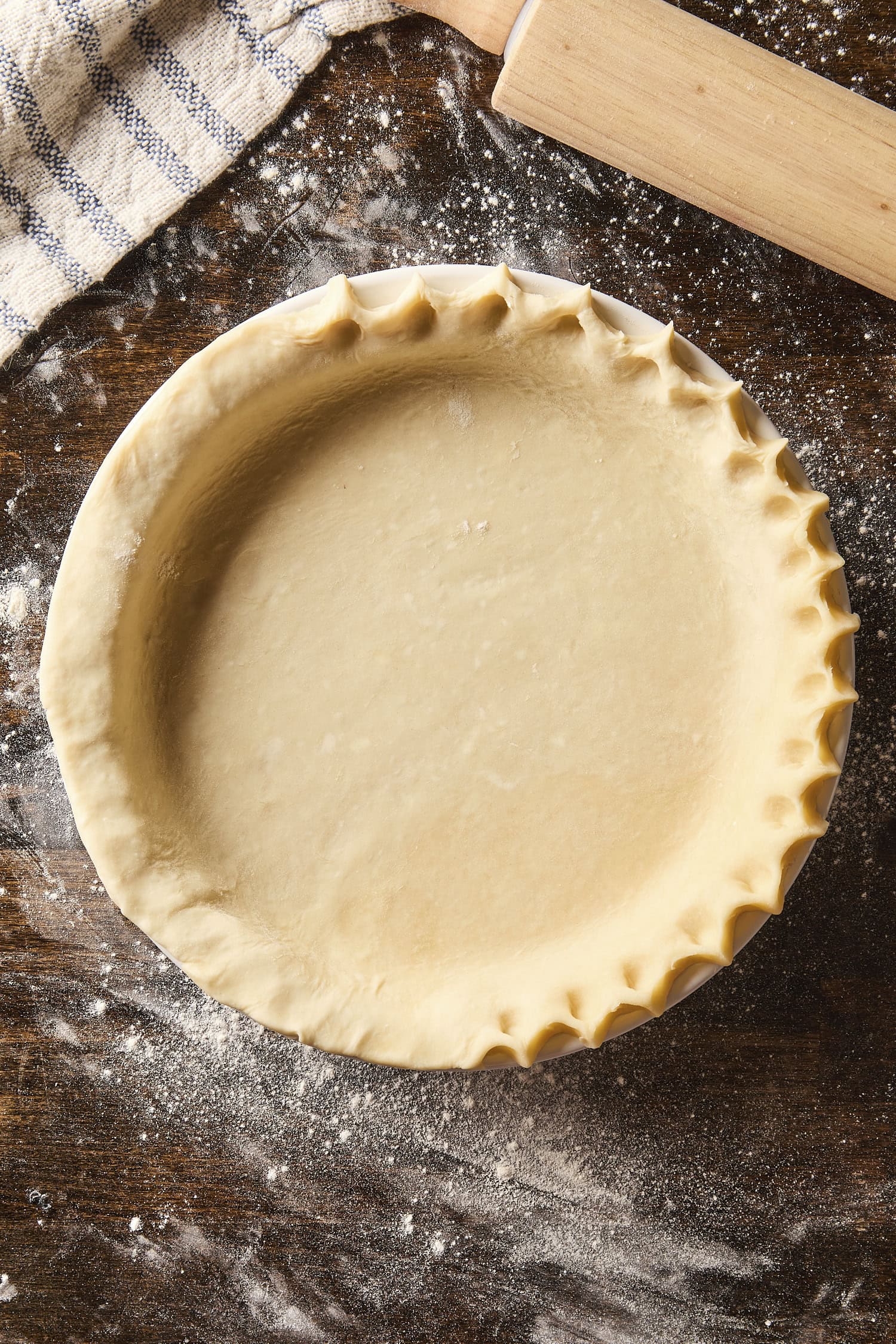
Create a thick edge – For that big, beautiful crimp, don’t trim off the excess. Instead, fold it under itself all around the rim to create a thick, even edge.
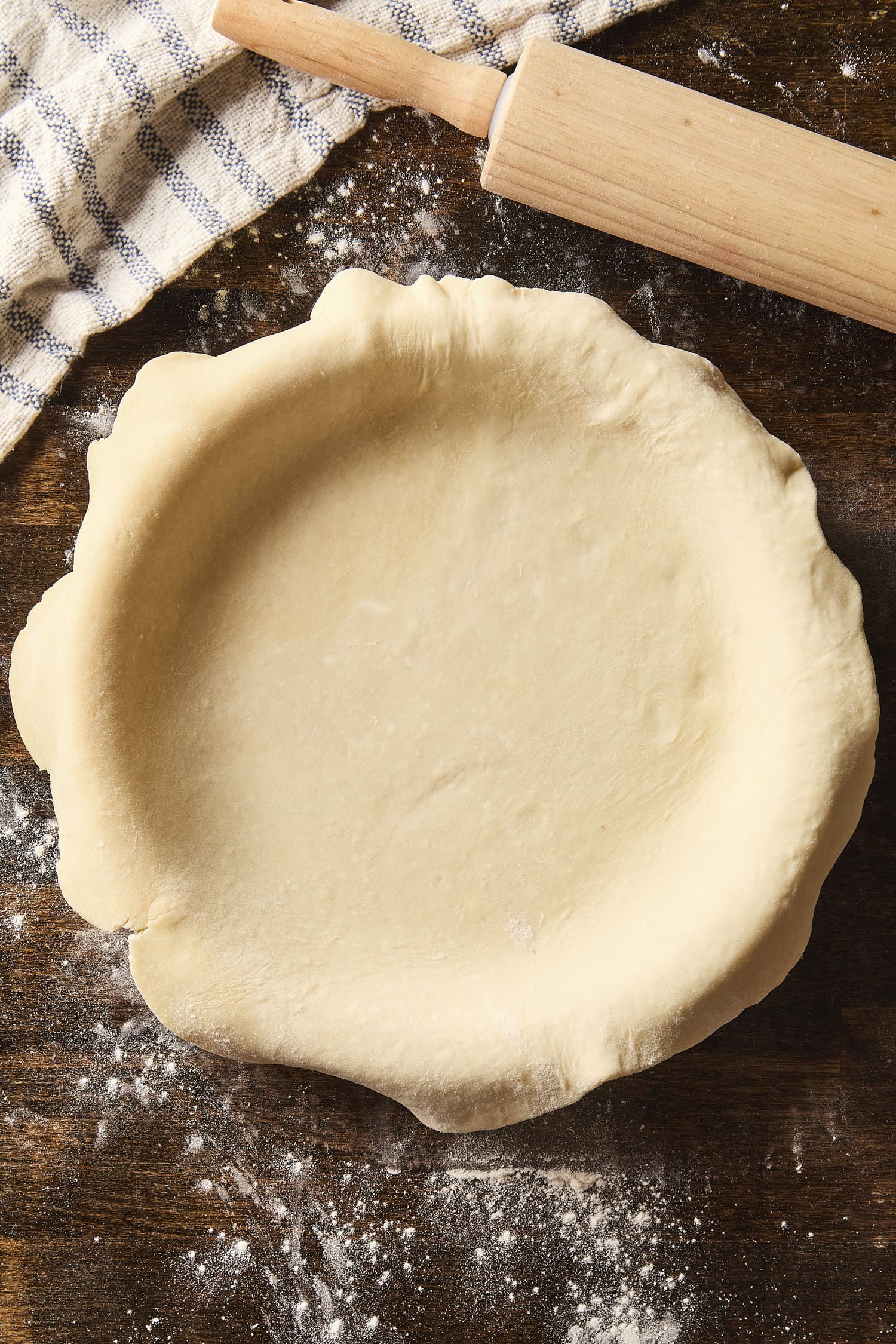
Crimp it – Use your thumb and forefinger on one hand and the knuckle of your index finger on the other to press in and form big waves. For smaller crimps, just reverse your fingers.
Now the crust is ready to be used however you want.
Recipe Tips
- Start with cold ingredients – Cut your butter into cubes and keep it in the fridge or freezer while prepping the rest. You want everything cold so the fat stays solid until baking—that’s what creates the flaky texture of the crust.
- Measure flour correctly – Scoop and sweep your flour to avoid packing in too much. Too much flour means a tough crust. If you prefer, weigh it for precision.
- Visible butter means flaky layers – Don’t overmix! You want to see those butter streaks in the dough, and it is a good thing, not a sign for worry.
- Use a straight rolling pin rather than a tapered one – A straight pin helps keep the dough even.
- Use a glass pie plate – It conducts heat evenly and lets you take a peek at the bottom.
Follow These Tips
Serving & Storage
Make ahead – Wrap the dough in plastic before rolling it out and store it in the fridge for up to 3 days.
Freeze – You can either roll out the dough, form it in a pie dish, and then wrap it in plastic and freeze it for up to 3 months. Or, you can wrap up the dough before being rolled out and also store it in the freezer for up to 3 months. When ready to use, thaw overnight in the fridge.
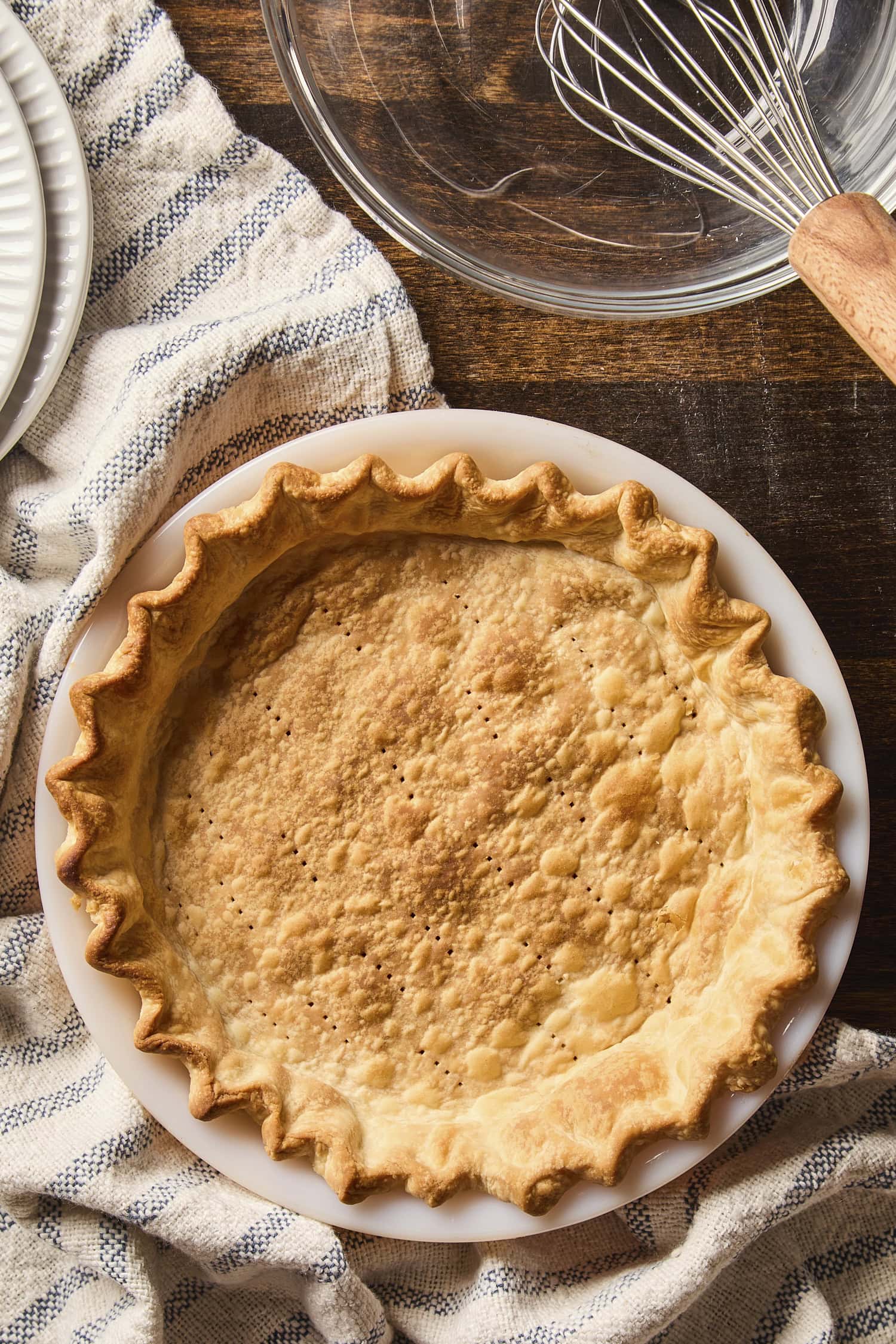
Blind bake – Line the pie crust with parchment, fill with weights, and bake at 375°F for 15-20 minutes. Remove weights and bake 20-25 more until golden. If your recipe has specific instructions about how to bake, use those.
Recipes To Use With This Crust
If you’re looking for the perfect pie recipe to use with this crust, then I have you covered. Here are just a few of my favorite pie recipes that require this crust recipe:
- Classic apple pie – also make sure to check out my guide for the best apples for baking
- The perfect peach pie
- Oatmeal nut pie
- Butterscotch pie
- Blueberry pie with streusel topping
- Rhubarb pie
Have I Convinced You to Make This Recipe?
I hope you make this recipe and put some food on your table. Leave a comment and share a star rating so you can let others know how much you love this recipe. This helps show others that this is a recipe they, too, can make, enjoy, and love!
The Best Pie Crust
Ingredients
- 1 ½ cups all-purpose flour
- 2 tsp granulated sugar
- 1 tsp kosher salt
- 10 tbsp (1 ¼ sticks) unsalted butter cut into ¼-inch pieces and par frozen (see note)
- 5-6 tbsp water ice cold
Instructions
- Prepare the dough: In a food processor, place flour, sugar, and salt. Pulse just to combine dry ingredients. Sprinkle the butter pieces over the dry ingredients and pulse to form a very coarse cornmeal-like mixture. Transfer to a mixing bowl and sprinkle with water. Mix to combine. The dough will still be crumbly. Pour onto parchment or plastic wrap. Using the wrap, pull up the sides to create a cohesive dough. Form a disk and pat it into a flat round. Chill for 15-20 minutes.1 ½ cups all-purpose flour, 2 tsp granulated sugar, 1 tsp kosher salt, 10 tbsp (1 ¼ sticks) unsalted butter, 5-6 tbsp water
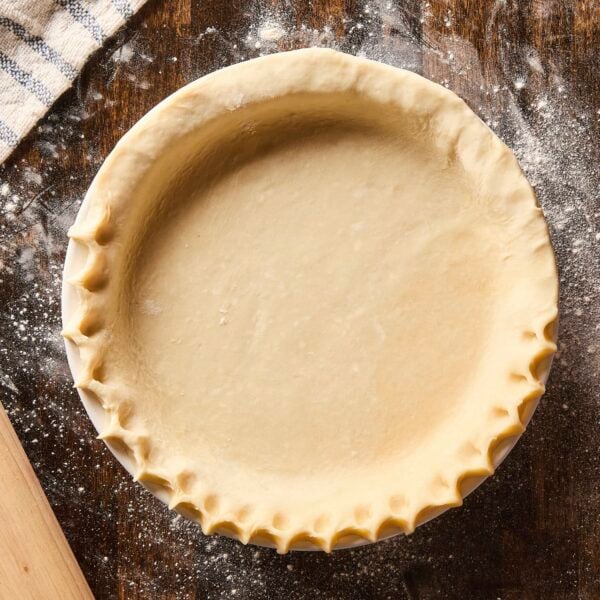
- Roll out the dough to fit a 9-inch pie pan. If the dough becomes too soft, place it back in the refrigerator to chill. Fill with your desired pie filling and bake according to the recipe.
Notes
Nutrition
Nutrition information is automatically calculated, so should only be used as an approximation.

Did you make this? Leave a comment below!
Styling: Addelyn Evans | Photography: Dera Burreson

By far, the best crust I’ve ever made!
I have never liked making pie crust until this recipe and I’ve made two in one week. One for Kaleb’s Rhubarb Custard Pie (delicious!!) and one for a cold strawberry pie for tomorrow. The crust was sooo good. My trusty hand me down Cuisinart Custom 11 did the hard part and I just smooshed the dough into the plastic wrap, popped it in the fridge for tomorrow morning.
Best recipes ever…
He makes it easy to follow recipes
He makes it fun
His enthusiasm is awesome
Kaleb, I have made this pie crust recipe a few times with success. It reminds me of my mother’s crust. We use this recipe to make crab quiche. It’s quite delicious. Your content is so much fun to follow.
Love the recipe but – cannot get the dough rolled out evenly. It falls apart every time – have to piece it together like a puzzle. Not sure how to make it right. Thx !!!
Can you use this crust for a pecan pie?
Thank you 😊
You sure can, Susie! I have a recipe for pecan pie that I love, if that helps!